Reporting
in Crisis
How attacks on journalists in conflict zones shape the information, decisions, and freedoms that we rely on and why their safety decides whether truth can survive in an age of AI, misinformation, and global conflict.

Trigger Warning!
This article contains references to violence, death, war-related trauma, and harassment experienced by journalists in war and conflict zones. The content may be distressing for some readers.

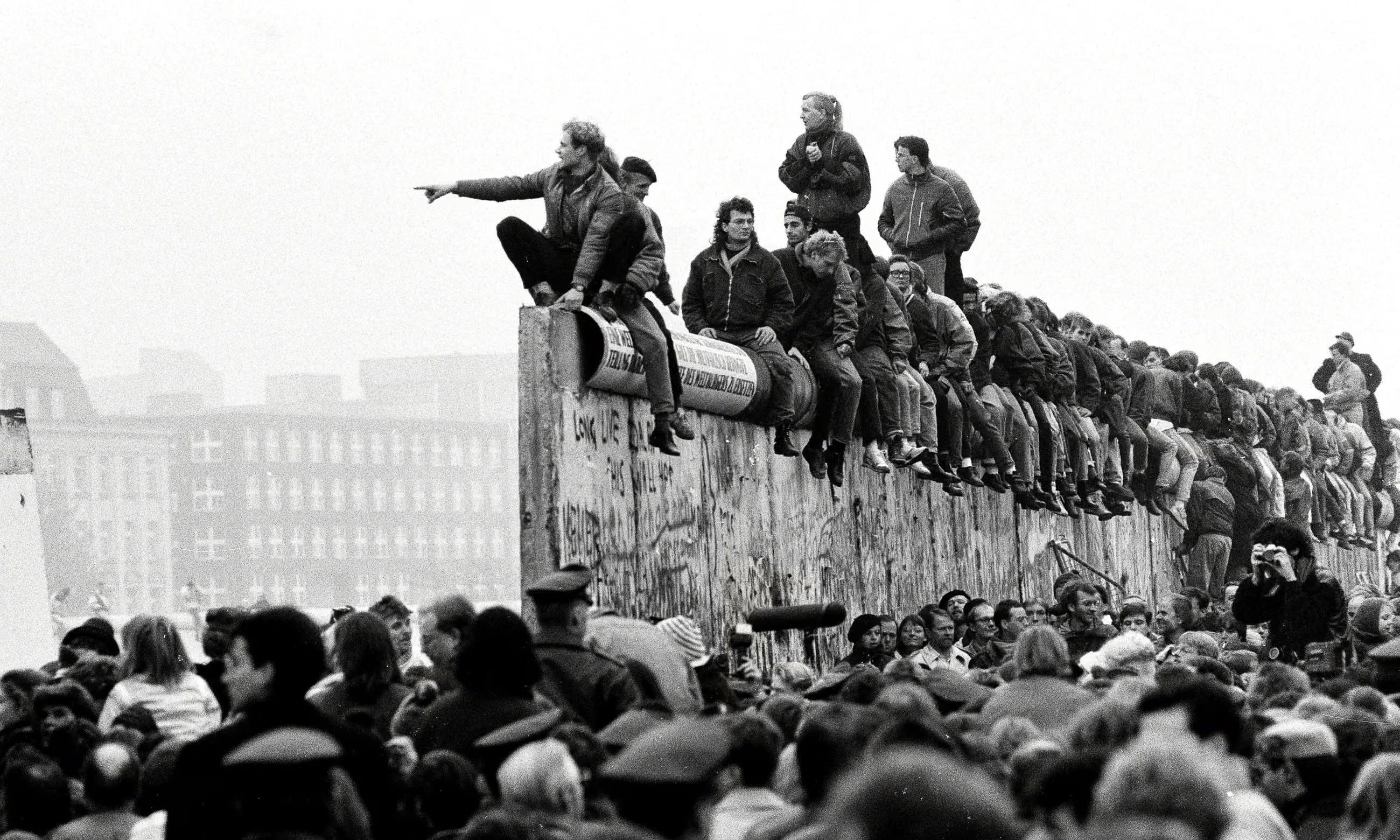
It was 9 November, 1989.
The Fall of the Berlin Wall had just begun.
Journalists from across the globe rushed to Berlin to witness a moment that, according to them, would reshape Europe.
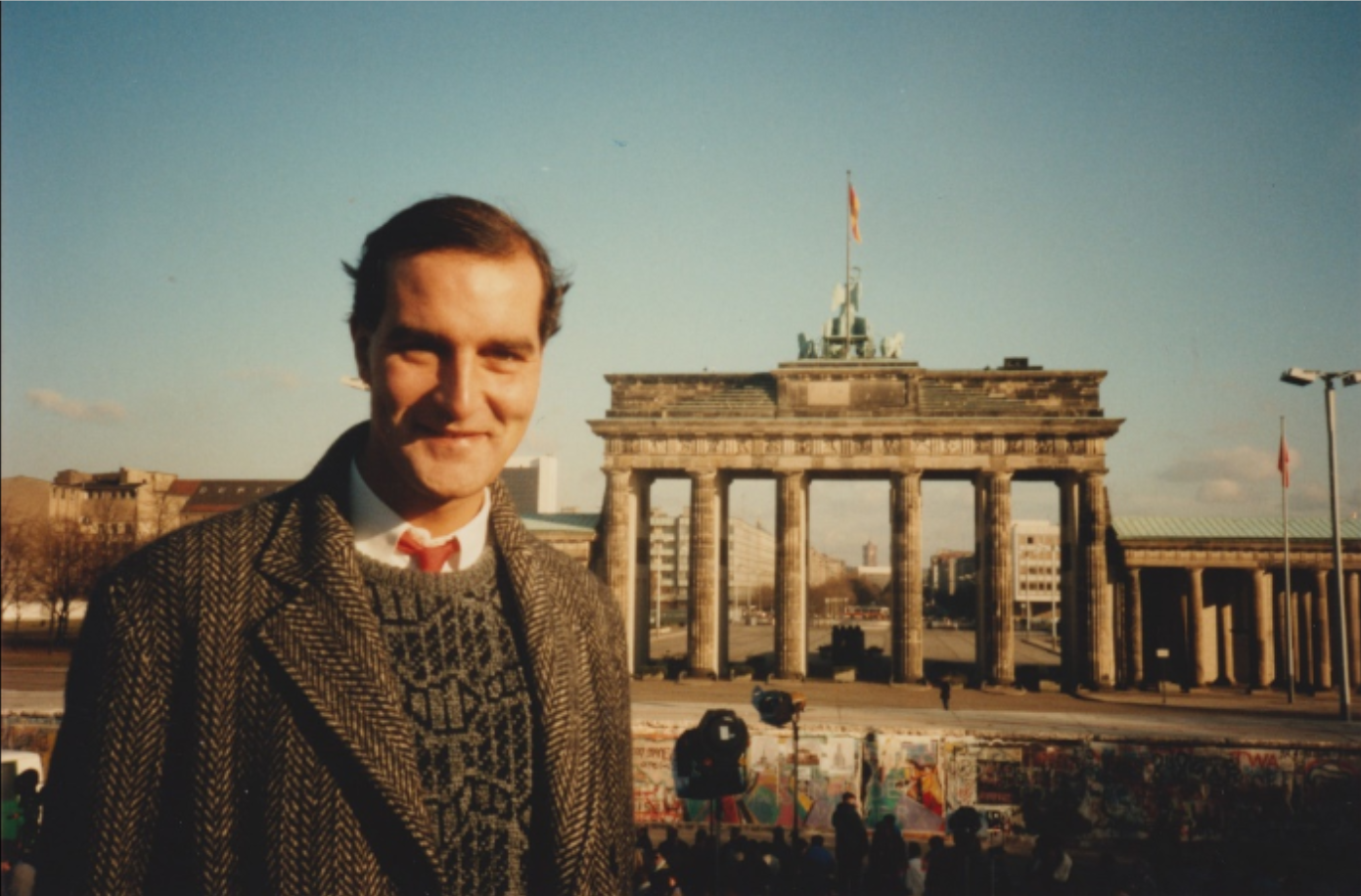
Among them was Glen Oglaza, reporting for ITN. What he describes is not just memory but something that can only really be understood when seen:
Witnessing History: The Fall of the Berlin Wall (1989) | Glen Oglaza | Reporter: Nayonika Manna

It is now 2026.
Journalists stand at dangerous crossroads, facing a crisis that scales far beyond the events they report on.
With so many ongoing global conflicts, the profession and its people themselves have become the story:
facing growing danger,
hostility,
and becoming increasingly targeted.
Each marker in the visualisation below not only represents a conflict but also a place where telling the truth has become more dangerous:
Ongoing Conflicts Around the World 28 zones
Hover a highlighted country to read the latest situation report. Click to pin.
Training that was once reserved for war correspondents is now needed for journalists covering protests. Political reporters regularly receive death threats, and the ones investigating corruption are murdered.
Data collected by the Committee to Protect Journalists (CPJ) shows just how serious the situation has become:
The organisation reported that 2025 was the deadliest year on record for journalists since it began tracking such data in 1992.
Worldwide, a total of 129 media workers lost their lives, with the war in Gaza accounting for more than two-thirds of the fatalities.
Israel was responsible for at least 86 journalist and media worker deaths in 2025, far more than any other country that year.
Most of those killed were Palestinian journalists, though Israeli air strikes also killed 31 staff working in Yemeni newspaper offices.
While Nick Turse’s study does not give exact figures, it does mention a decline in the number of experienced foreign correspondents in conflict zones. This suggests that the danger to journalists may be even more serious than the death toll alone shows.
Jodie Ginsberg, the CEO of CPJ, believes that the numbers reflect a much broader trend:


In at least 38 cases documented by CPJ last year alone, we believe journalists were deliberately targeted. For the past three years, more than 300 journalists were in jail at the end of the year, including in countries that are supposed democracies. It is no surprise, unfortunately, that those numbers have grown because attacks on the press have grown exponentially in the past decade.
In 1992, 56 journalists and media workers were killed. Last year's number is more than double that. In 1992 there were 113 journalists in jail. Last year's number is more than triple that.


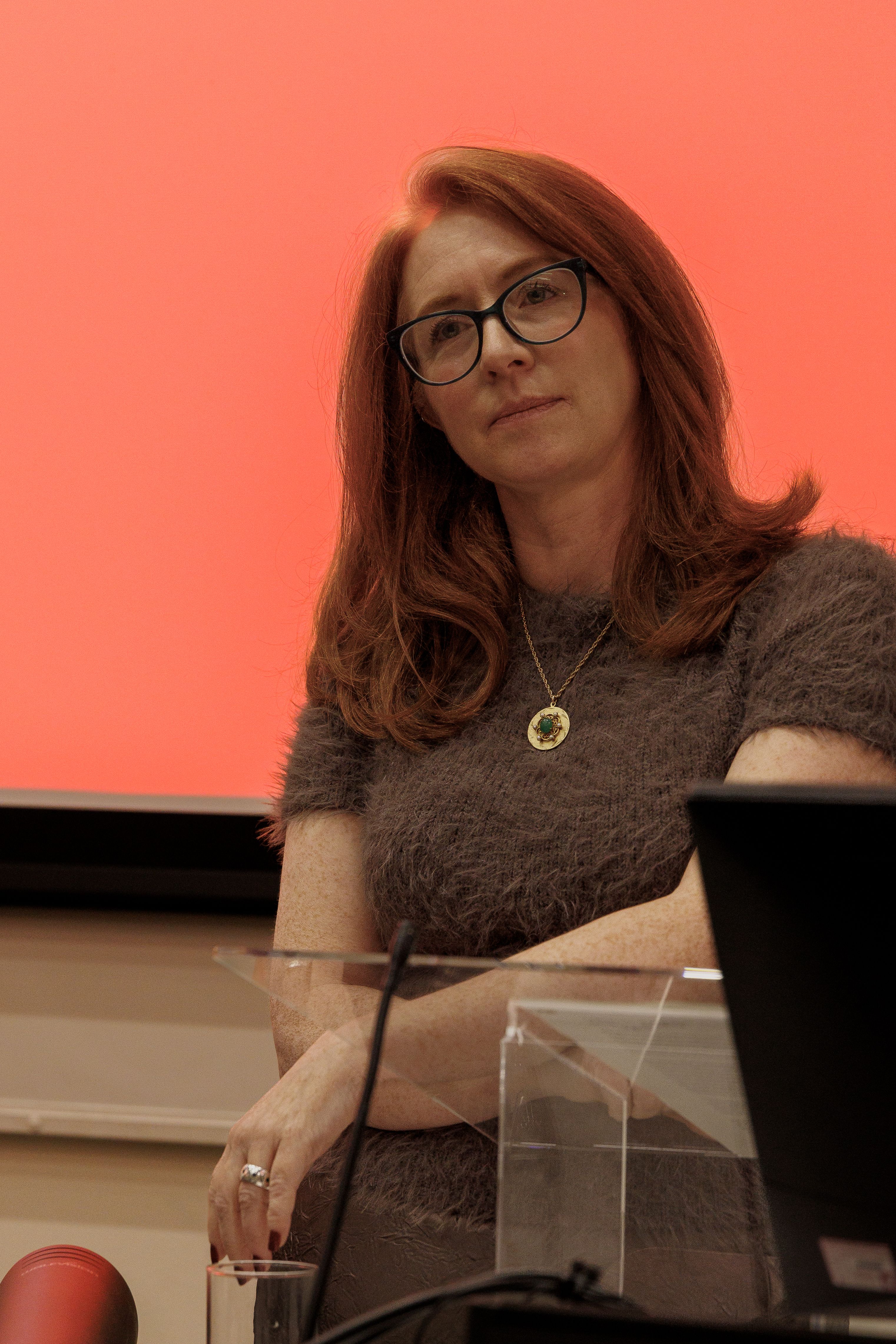
BUT, WHY DOES THIS MATTER? WHY SHOULD IT MATTER?
It is easy to look at global statistics and feel a sense of distance. Why should the average person care when a reporter they have never met is silenced or imprisoned?
It's because journalism and the free press are regarded as “indispensable elements in a just and open society”.
Targetting the press leads to subsequent attacks on our collective rights.
Without independent reporting, we lose our window into how decisions are made in our favour. When a journalist's voice is silenced, the information vacuum gets quickly filled by propaganda and lies.
If independent journalism survives war, truth survives, and when truth survives, democracy has a chance to endure.
More than 850 journalists were killed while doing their job between 2010 and 2019, yet in 85% of the cases, the perpetrators remain unpunished.
This culture of impunity represents a total breakdown in the security and judicial systems that are supposed to protect us all.
As John Crawley, co-director of Headlines Network, explains:
Journalists are the most precious resource, and often that is forgotten. By protecting journalists, you are allowing better journalism to exist.
We bear witness to things. That is our job. We hold powerful institutions, politicians, and businessmen accountable, which is an important democratic function because otherwise, they will get away with their wrongdoings.
Additionally, in the face of war, this truth becomes a lifeline.
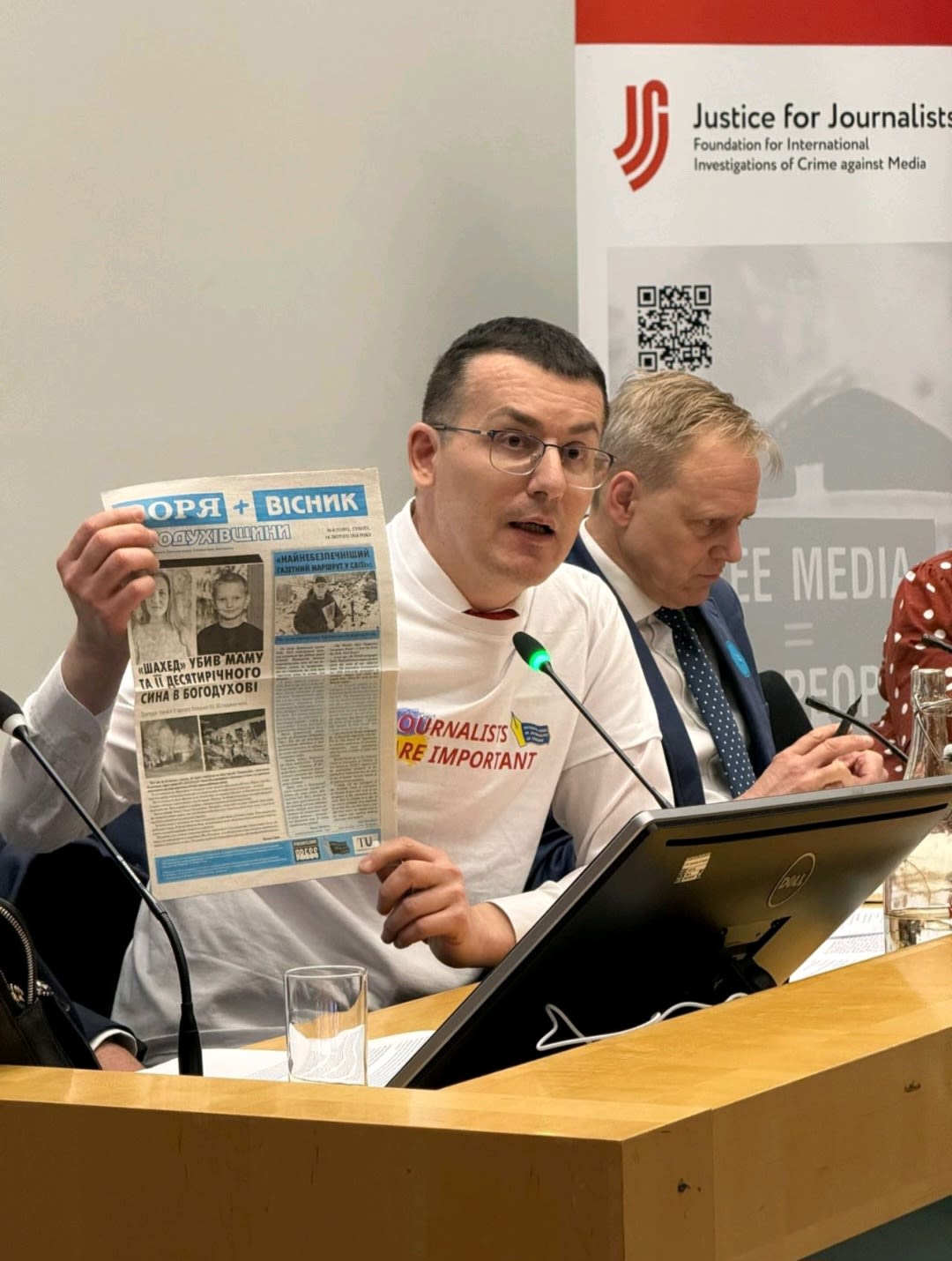
Sergiy Tomilenko, the president of the National Union of Journalists of Ukraine, describes the lengths to which journalists go to defy this silence:
The newspaper’s editor personally delivers copies of newspapers to Ukrainian villages under threat and close to the Russian province. Recently, we provided a special drone detection device to help them stay safe while distributing the papers. For many communities, such newspapers are the only reliable source of verified information. And when it comes to villages in darkness, these newspapers become a speaking point of truth.

In the age of social media influencers and misinformation, we need accurate information that only firsthand reporting can provide.
Joel Flynn, a war correspondent for TRT World who has covered the front lines of Ukraine extensively since early 2024, explains:
Why We Run Toward the Gunfire: The Responsibility of Journalism | Joel Flynn | Reporter: Nayonika Manna
But it is this very connection that many governments and groups seek to sever. By hampering the news cycle and obstructing the flow of verified information, they aim to ensure that the “truth” never reaches the public.
Ginsberg explains how this process is calculated, and the attacks on the media follow four distinctive stages: smear, harass, criminalise, and kill.

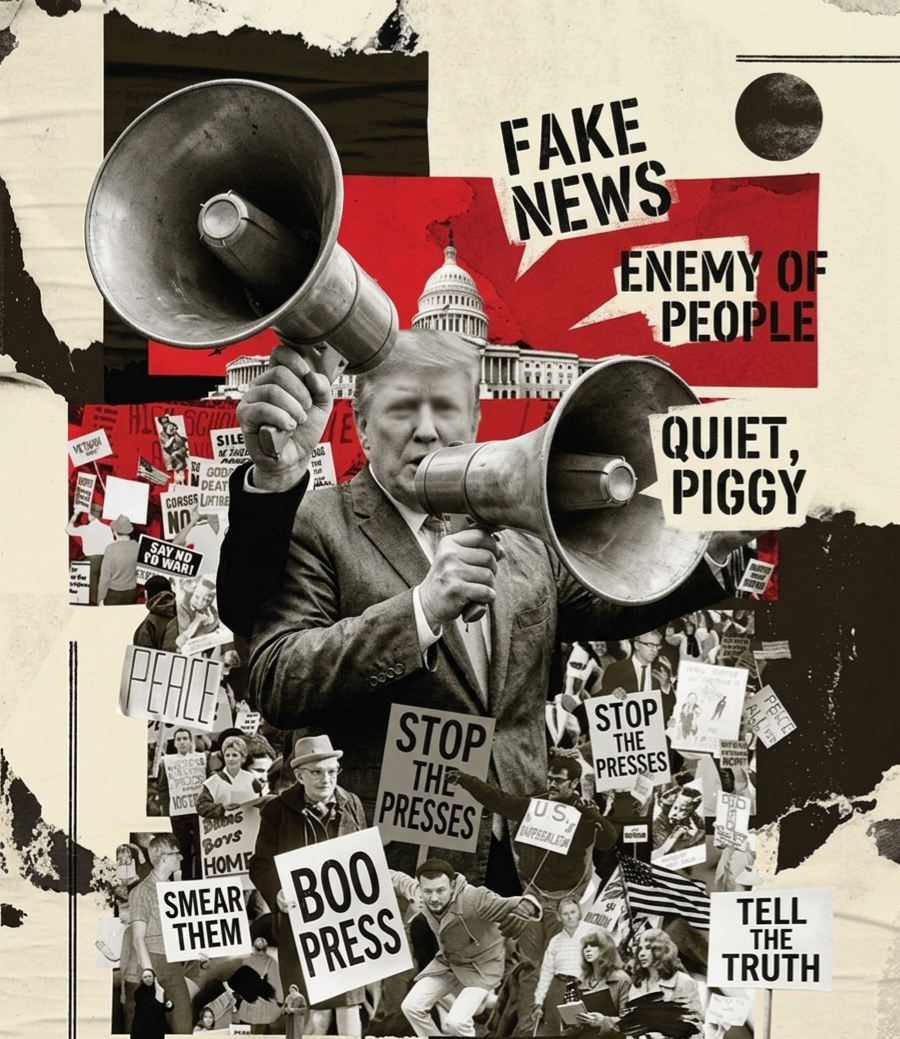
STAGE 1: SMEAR
Smearing journalists is a deliberate strategy to sabotage their credibility.
Personal insults, false accusations, and online attacks spread by politicians and influencers make the audience doubt mainstream media.
Politicians are regularly seen publicly mocking reporters, calling them “enemy of the people” or “fake news”.
In November 2025, Bloomberg White House correspondent Catherine Lucey was told, “Quiet, piggy”, on Air Force One by US President Donald Trump.
In the UK, Labour MP Neil Coyle used abusive language against a journalist.
Lobbyists linked to Labour Together falsely suggested reporters were connected to Russia.
Boris Johnson said journalists were “always abusing people” during a pandemic briefing.
In Gaza, journalists are accused of staging images or videos, labelled as “Gazawood” or “Pallywood”.
Moreover, on Instagram and X (formerly Twitter), accounts with hundreds of thousands of followers spread fake claims, eroding trust and making independent reporting easier to question.
Smears create suspicion and hostility toward journalists, which paves the way for the next stage.

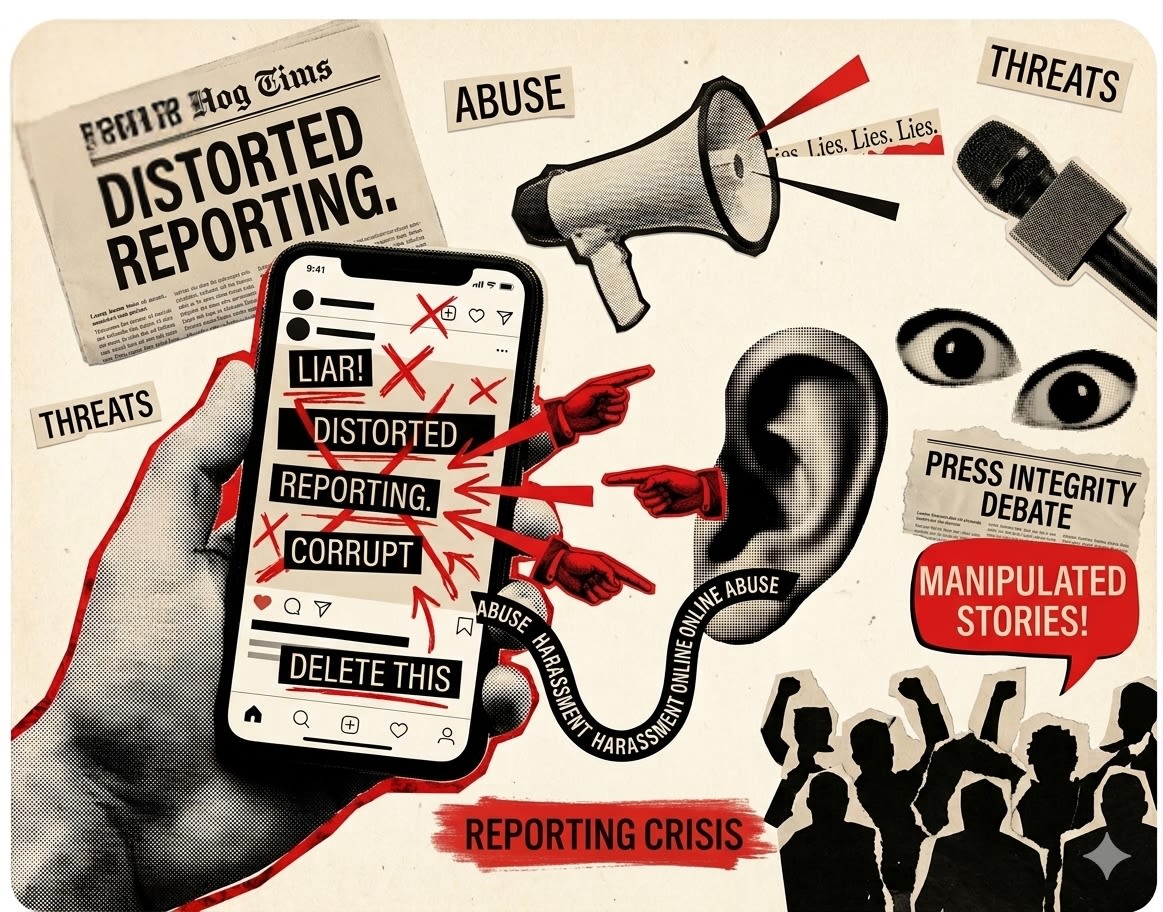
STAGE 2: HARASS
Journalists are subjected to daily online harassment, including threats of death and rape.
Legal intimidation and financial pressure are also used to exhaust reporters and silence their work.
Much of this abuse now falls under “tech-facilitated gender-based violence”, where digital platforms, messaging apps or AI tools are used to especially discredit women journalists.
British journalist Michela Wrong experienced this after publishing “Do Not Disturb: The Story of a Political Murder and an African Regime Gone Bad” in 2021.
The book investigated the killing of Rwandan dissident Patrick Karegeya and the wider campaign against critics of the government of Paul Kagame.
The reaction was immediate. Online abuse flooded her DMs, threats of death and rape arrived like daily notifications, and every post she made became a trigger.
“When I wrote the book, I knew I was going to become a target,” she said.
For five years, she has faced threats on X from the “Rwandan Twitter Army”.
After I started promoting my book, I found that I was not only being targeted with the most vicious onslaught on X of personalised abuses as a racist, a genocide denier, a whore, and someone who has slept with Patrick Karegeya himself, but attempts were also physically made to prevent my meetings and my promotional events in Brussels, South Africa and New Zealand.
As for Wrong, the accusations also have legal consequences.
In Rwanda, “genocide denial” is a criminal offence often used to silence government critics.
Furthermore, because denying recognised genocide is also illegal under EU law, these labels, routinely hurled by Rwandan trolls, are more than just insults; they are deliberate attempts to criminalise her work in both Africa and Europe.
If I were to set foot in Rwanda, I could be prosecuted and go to jail for quite a long time.
This results in the third stage: Criminalise.


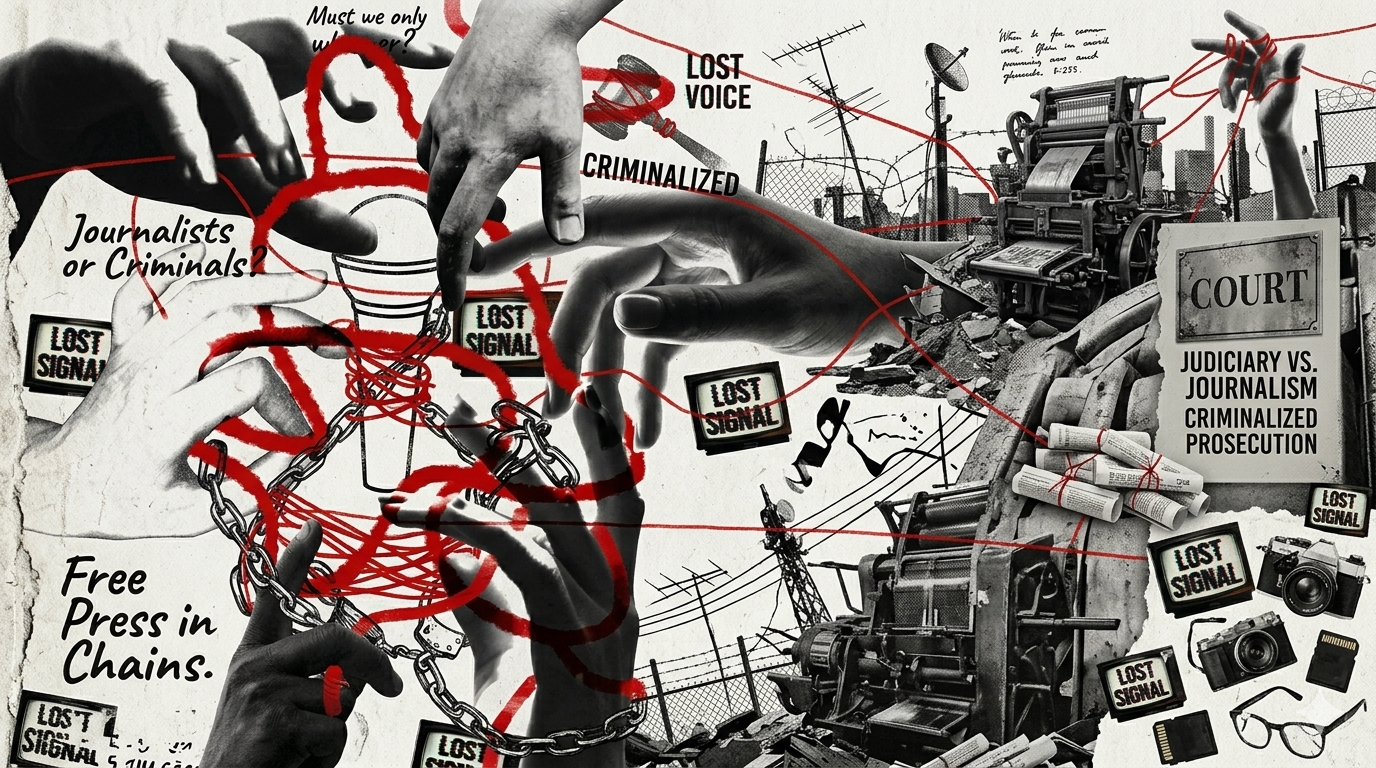
STAGE 3: CRIMINALISE
“Criminalising journalists is not just about controlling public perception; it is also a way to silence individual reporters and send a warning to others in the profession.”
By portraying journalists as criminals, authorities attempt to stain their credibility and cast doubt on the information they provide.
If the public stops trusting journalists, those in power gain greater control over the narrative.
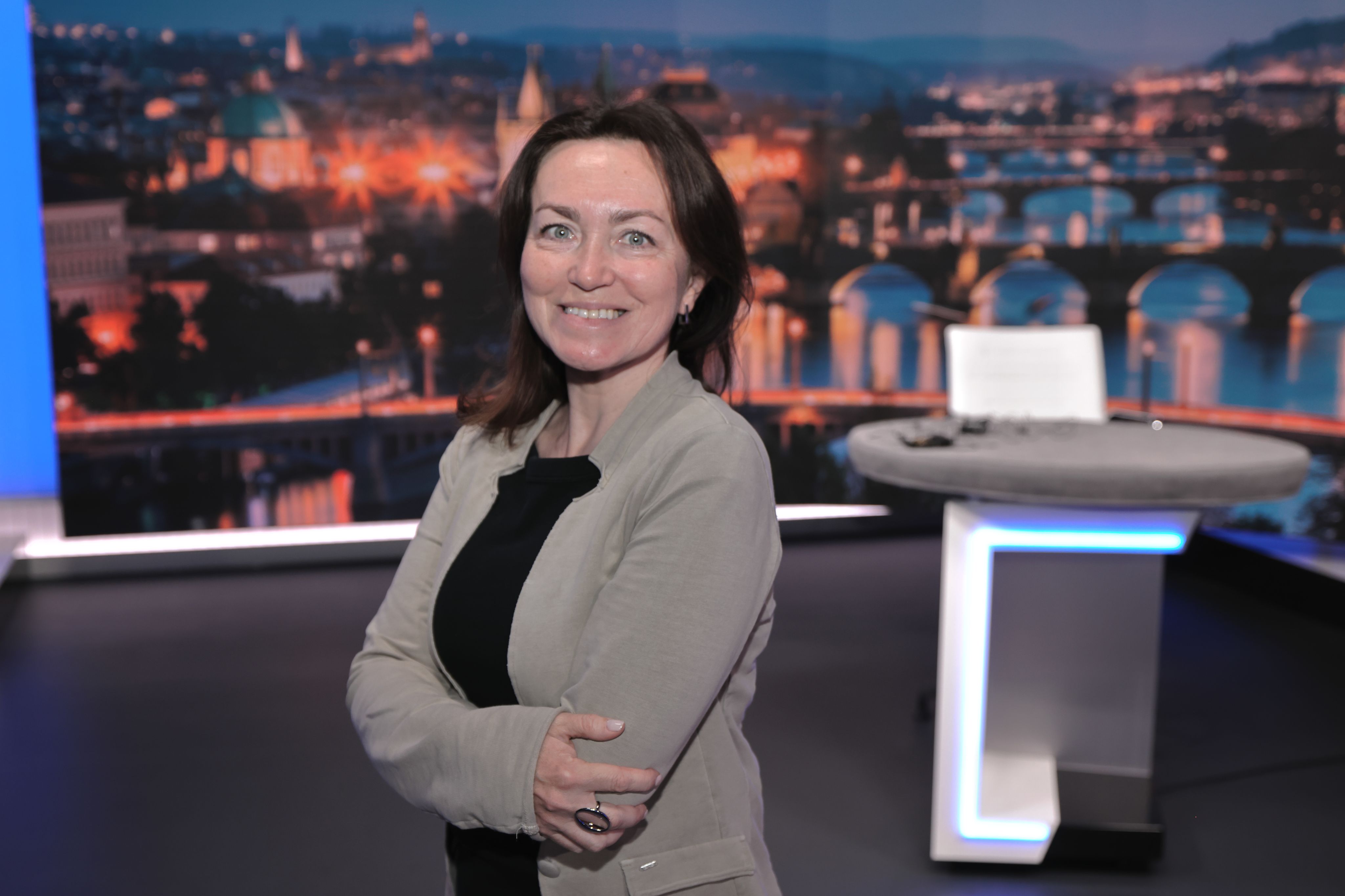
Alsu Kurmasheva, an editor and press freedom advocate at Radio Free Europe/Radio Liberty, experienced this first-hand when she travelled to her hometown in Russia in 2023 to care for her sick mother.
While returning to Prague, she was stopped at the Russian airport, and her documents were confiscated.
I was told very politely that I would be able to travel back to Prague within a couple of days, but those couple of days lasted for five months of fear, uncertainty, and house arrest. I didn’t know what was happening. I was ready for everything but not prison.
We journalists never want to be the story. We want to be behind the stories that we cover. What happened to me was a very intimidating, very horrific experience I wish I never had.
According to Kurmasheva, this slow escalation is deliberate.
“They don’t put you in jail immediately. First, they stop you from travelling and working. By that, they try to intimidate you and your colleagues to stop doing what you are doing.”
Eventually, she was imprisoned before being released as part of a major international prisoner exchange in August 2024.
“I’m the lucky one, and the miracle happened. I was exchanged in the biggest Russia-West prison exchange since the Cold War.”
However, even for those who manage to escape imprisonment, the pressure does not always end. Kurmasheva says many journalists have fled into exile since Russia’s invasion of Ukraine, but distance does not necessarily mean safety.
“Living in exile doesn’t mean that journalists are safe. Their families have been interrogated, and they can’t see them. They can’t help them. This is another tool that the governments here use. They all use the same playbook.”
For journalists who continue reporting under these conditions, criminalisation becomes a means of intimidation designed to silence not just one voice but many.
And still, when intimidation and imprisonment fail to silence journalists, the consequences can escalate to attacking or killing the journalists.


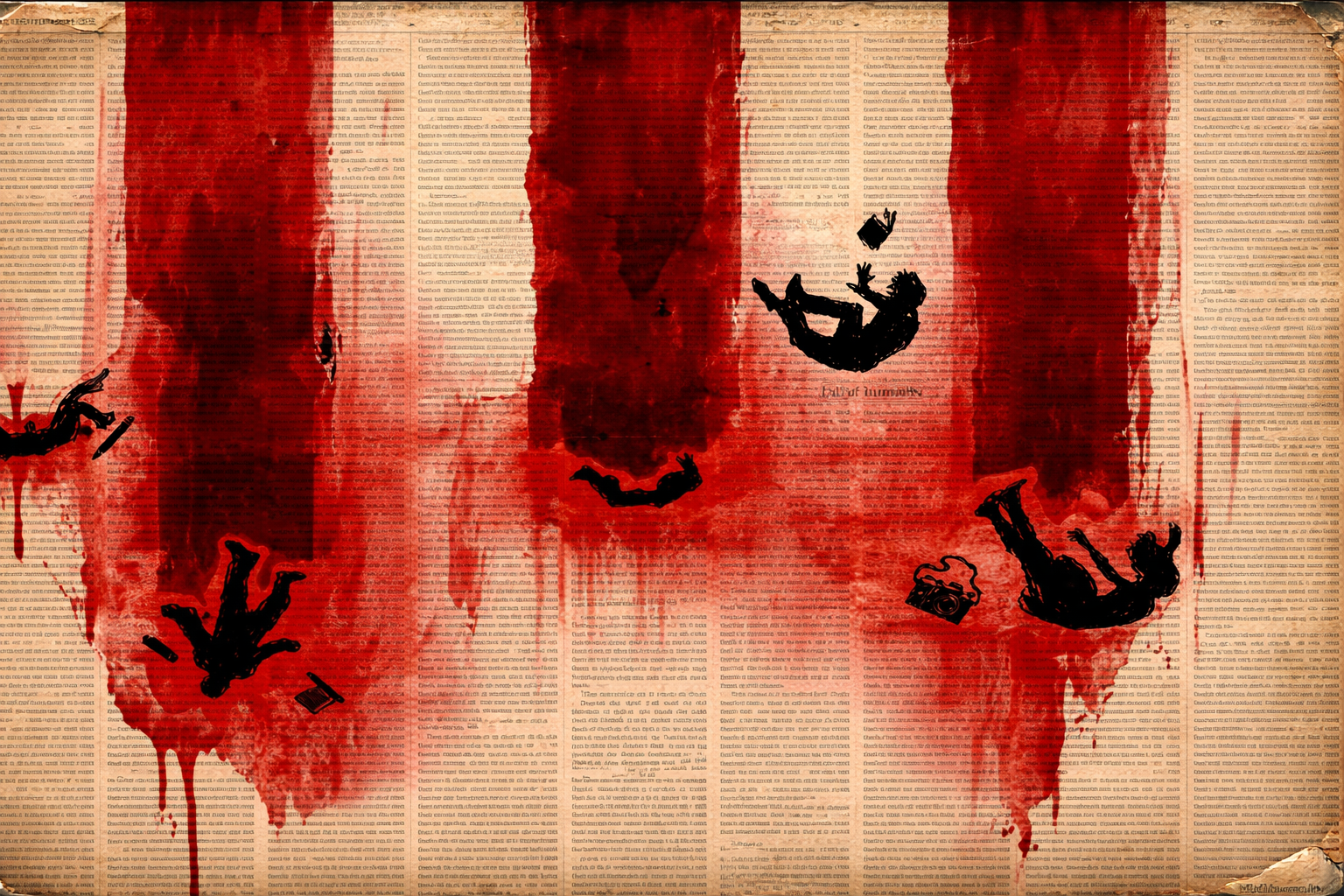
STAGE 4: ATTACK AND KILL
Where once a journalist wearing a press vest was welcomed with respect and offered some guarantee of protection, many in conflict zones today say it makes them more prone to being targets. This shift, however, did not happen overnight.
For decades, reporters covering wars were often seen as observers rather than participants in the conflict. But that perception began to change.
While there is no definitive moment when journalists first began to be deliberately targeted, Oglaza recalls one war where the shift became painfully clear:
The Bosnian War: The Moment Journalists Became the Enemy | Glen Oglaza | Reporter: Nayonika Manna
Today, attacks on journalists are no longer rare exceptions. For many reporters on the ground, the line between witness and target has blurred.
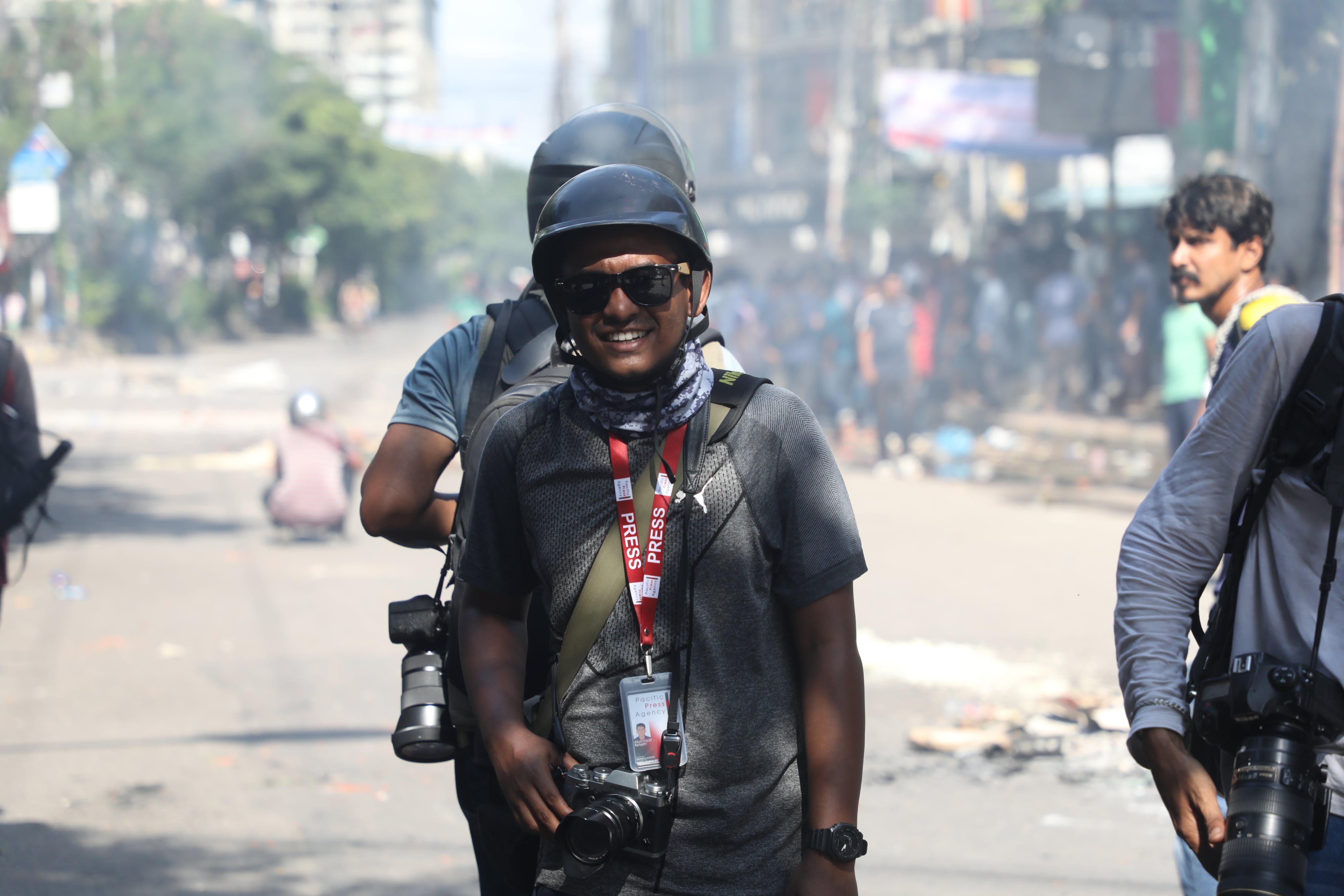
Bangladeshi photojournalist Abul Hayat Rahadh of the Dhaka Tribune describes how the risks of documenting political violence became increasingly real during the July 2024 uprising in Bangladesh:
“I felt I could do more than just take a picture, and I felt an adrenaline rush while covering political conflicts.”
But the intensity of that moment quickly turned into something much heavier.
The date was 4th August 2024. I was seeing the bodies of protesters taken to the hospital. I had never seen this many dead people before that day. I was seeing sound grenades exploding here and there. Protesters shouting at the cops. Sirens of the cops and the ambulances. Watching people get injured and even killed.
For Rahadh, this moment was the point where journalists often found themselves caught between conflicting factions:
The student wing of the then-ruling party, the Awami League, would often turn aggressive towards the journalists. Cops would sometimes not let us take pictures in some locations. The same goes for the demonstrators; they felt like all the journalists apart from a particular channel were only showing what the government wanted to show. That's a challenge because even after standing at the event, I wasn't able to take many pictures.

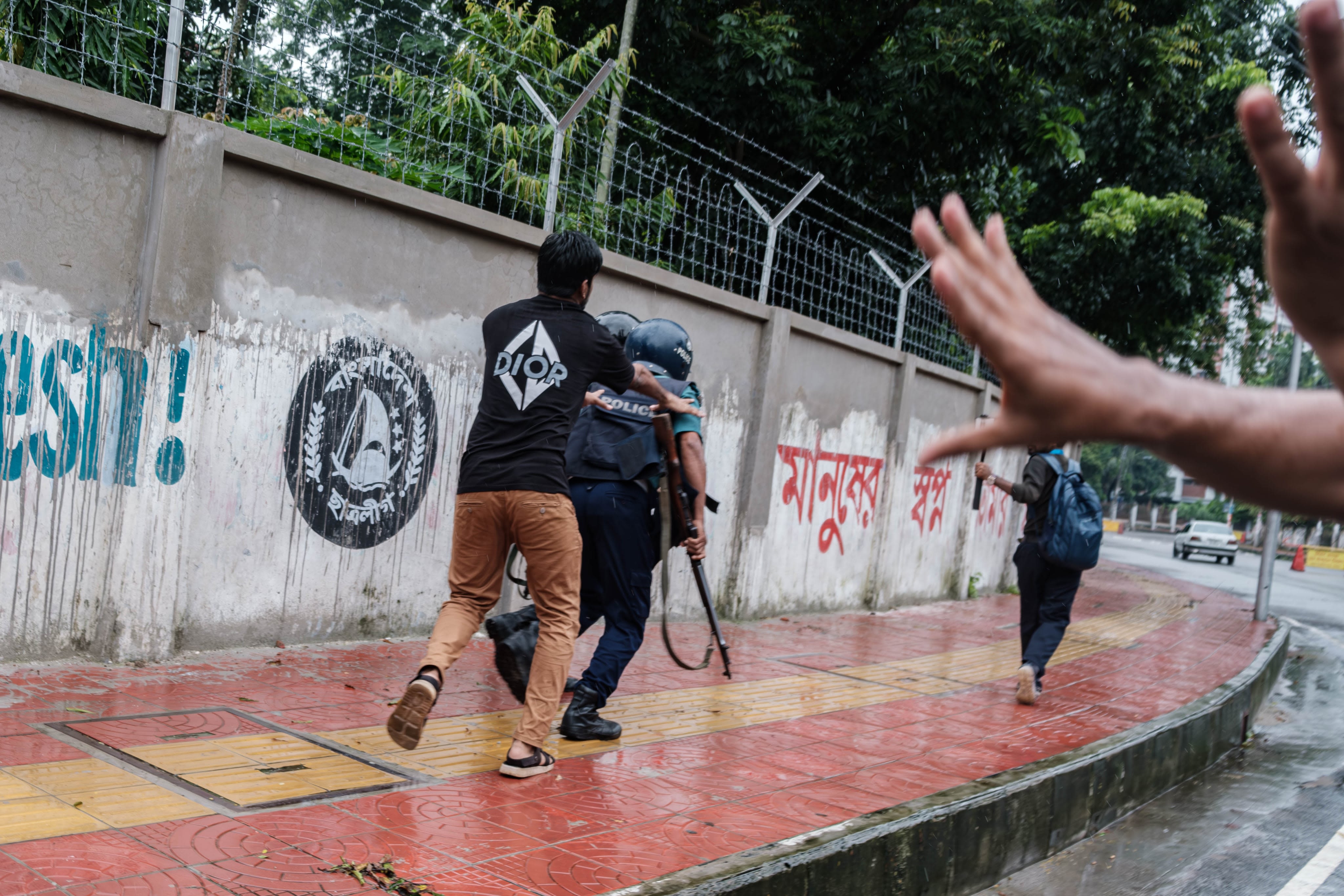
Protesters attacking the police while a journalist runs in front of them trying to capture the moment. Image Credits: Abul Hayat Rahadh
Protesters attacking the police while a journalist runs in front of them trying to capture the moment. Image Credits: Abul Hayat Rahadh

For some journalists, the violence results in death.
Killing journalists is the ultimate form of censorship.
When a reporter is silenced through violence, the story they were trying to tell is often silenced with them.
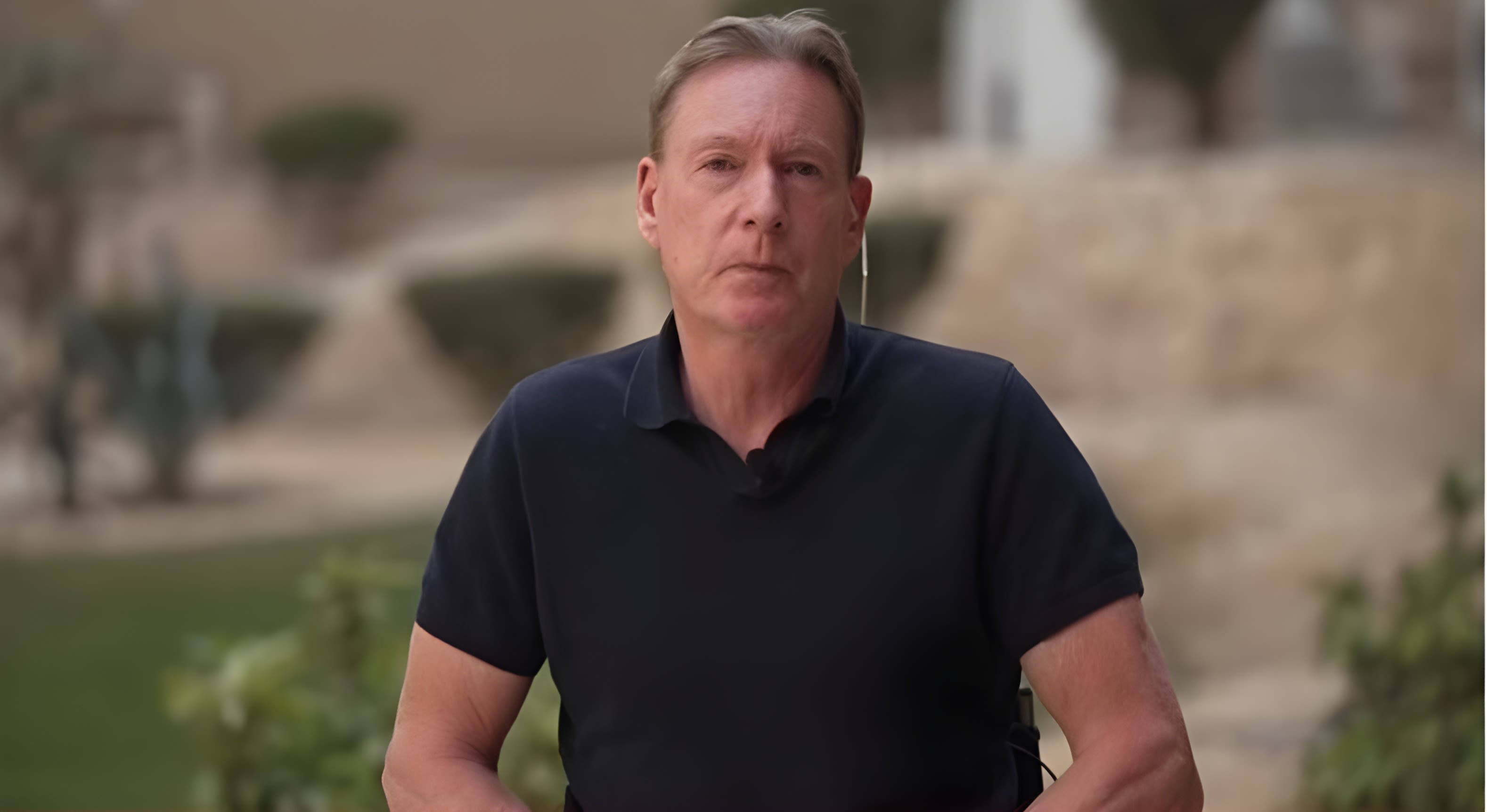
On 6 June 2004, Frank Gardner, a BBC journalist, was reporting in Riyadh, Saudi Arabia, when he and his cameraman, Simon Cumbers, were ambushed by gunmen linked to Al-Qaeda.
Cumbers was killed instantly.
Gardner survived, but his legs remain partially paralysed.
I was still recovering in hospital in 2004. I do remember feeling very unreal, as if I were taking part in a film sequence. It was very hard to believe this was actually happening to me right there and then.
We had finished filming and were packing up when the first gunman appeared. We both then ran for our lives. Obviously I was very shaken by it. I remember feeling an immense sense of injustice that I had devoted so much of my adult life to learning, appreciating and understanding the Islamic and Arab worlds, only for this to happen.

THE AFTERMATH: SELF AND REACTIONS FROM NEWSROOMS
Attacks similar to Gardner's are becoming increasingly common, because of which modern reporting now requires a constant and exhausting calibration of risk. Flynn explains:
Reporting in the Crossfire: Drones and the Ukraine Frontline | Joel Flynn | Reporter: Nayonika Manna
What follows, however, is often less visible.
When journalists are killed, the shock travels far beyond the battlefield. It spreads through the newsroom and through colleagues who shared the same risks. As Crawley explains:
“Historically, mental health and wellbeing have not come up naturally in a newsroom. Journalists are told not to become part of the story, to be objective and step back from the fray. That does not create an environment where people feel able to say they are not okay. For a long time, admitting that was seen as not being a good journalist.”
For reporters on the ground, like Flynn, that pressure is not theoretical:
Dealing with Trauma: The Psychological Impact of War Reporting | Joel Flynn | Reporter: Nayonika Manna
But trauma is no longer reserved only for those dodging bullets and drones.
Video editors and desk journalists tasked with sifting through hours of graphic and violent raw footage also face secondhand trauma that is just as real. Crawley continues:
“In the last 10 to 15 years there has been a growth in vicarious trauma, where you experience the trauma of somebody else by bearing witness to it. Now much of journalism happens in newsrooms, where people are constantly seeing images and video from disaster zones. That volume and repetition can make the impact more acute.”

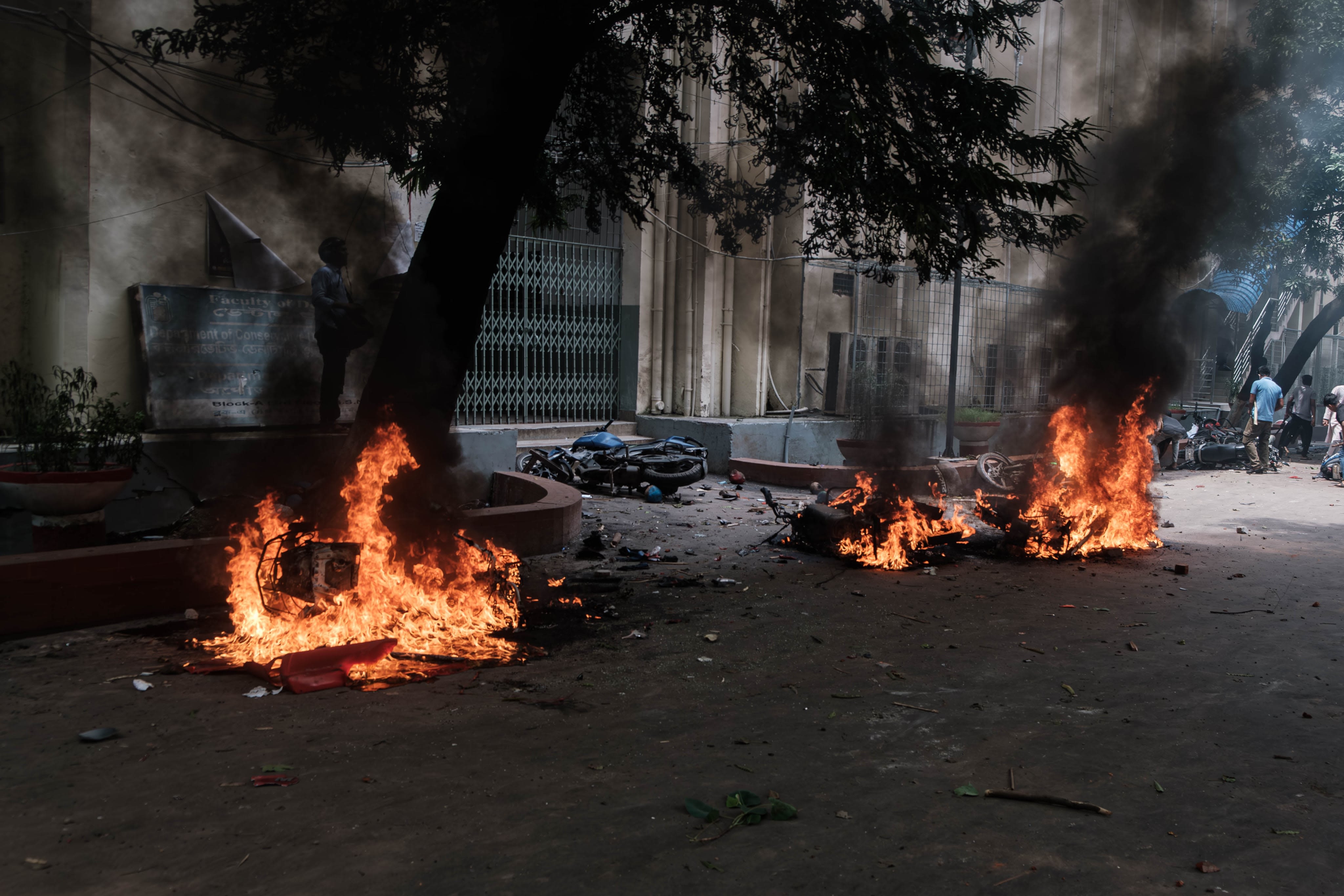
Burning police motorcycles due to the civil disobedience in Bangladesh to demand the government's resignation. Image Credits: Abul Hayat Rahadh.
Burning police motorcycles due to the civil disobedience in Bangladesh to demand the government's resignation. Image Credits: Abul Hayat Rahadh.
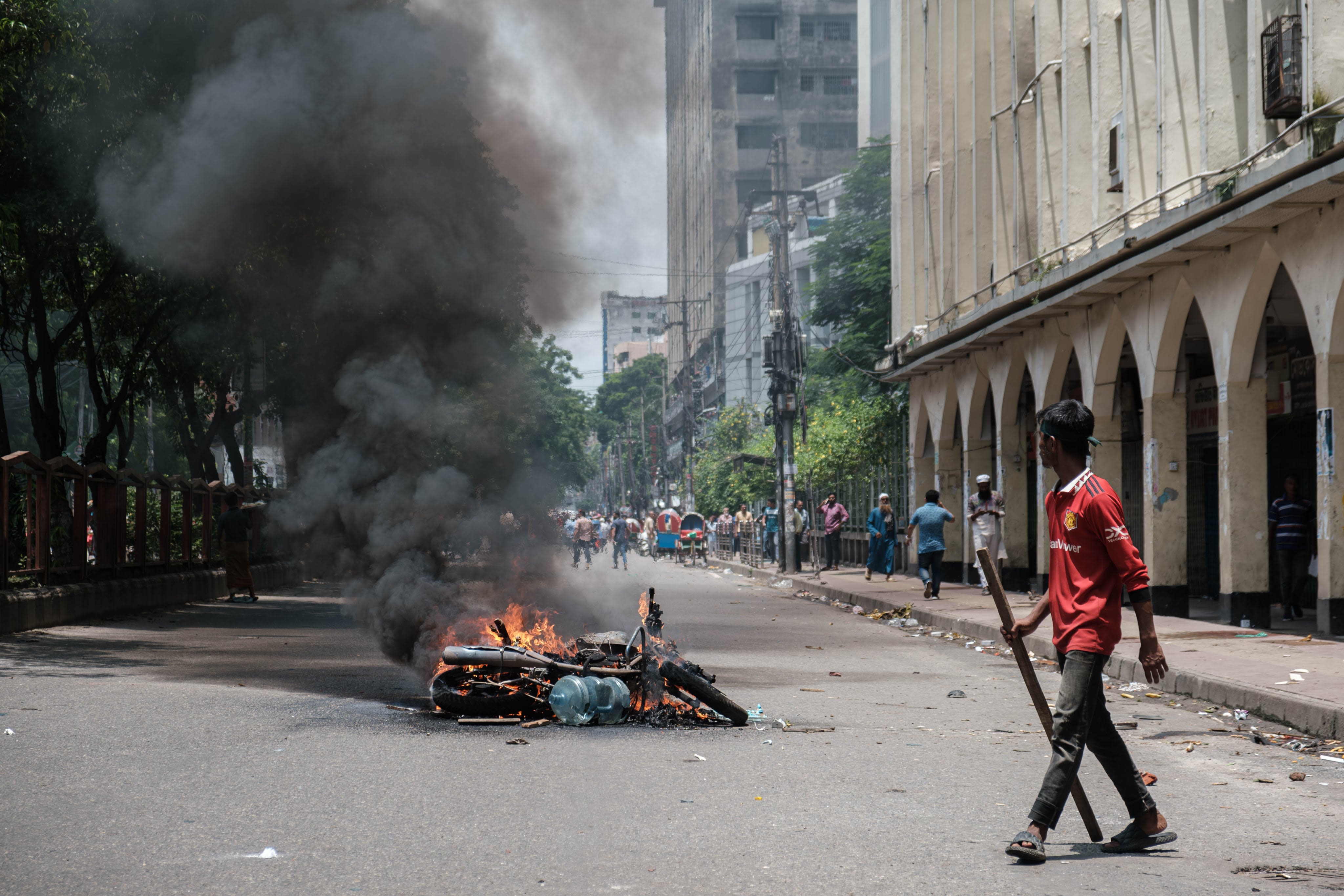
A burning police motorcycle due to the civil disobedience in Bangladesh demanding the government's resignation. Image Credits: Abul Hayat Rahadh.
A burning police motorcycle due to the civil disobedience in Bangladesh demanding the government's resignation. Image Credits: Abul Hayat Rahadh.
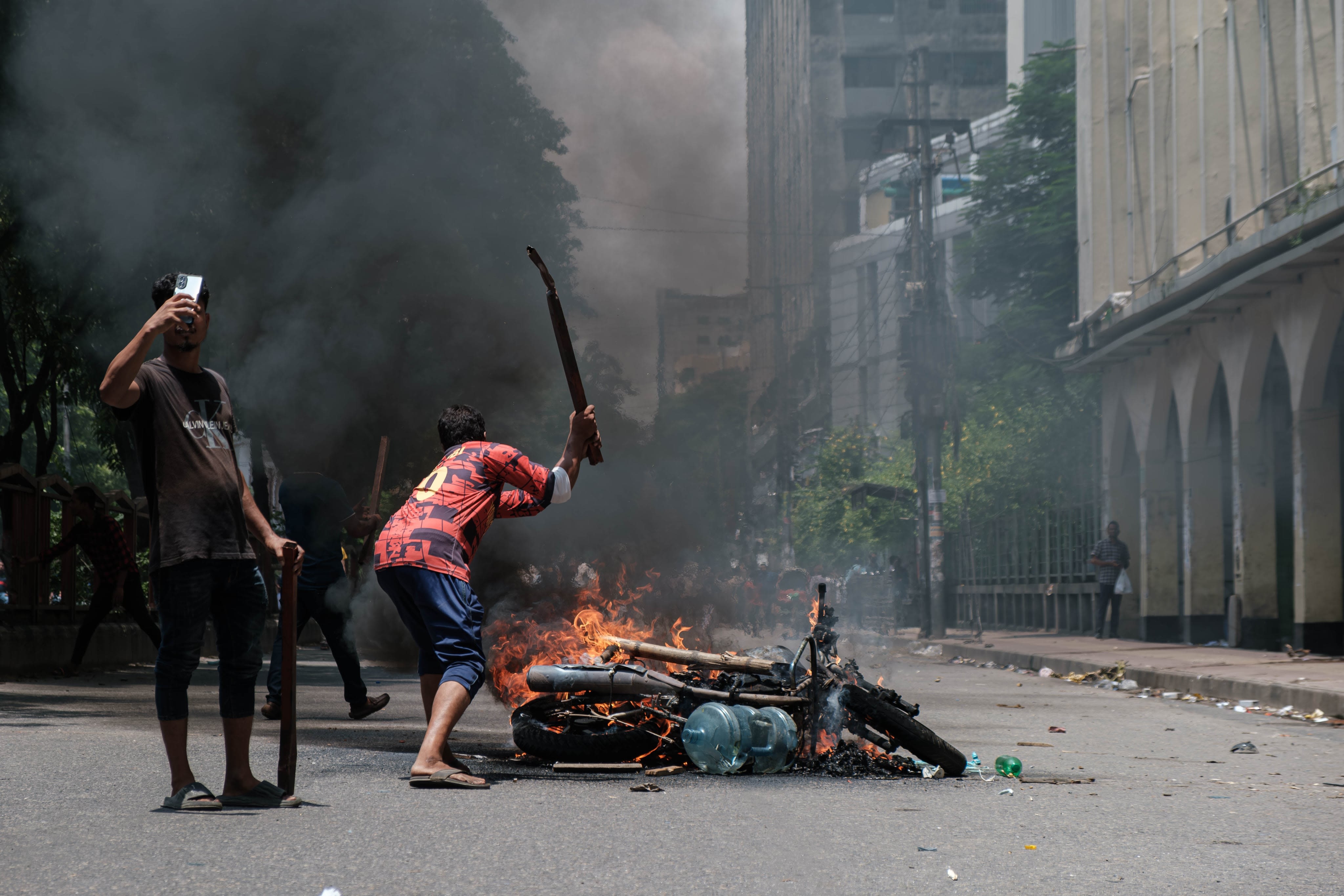
A protester breaking a burning police motorcycle due to the civil disobedience in Bangladesh to demand the government's resignation. Image Credits: Abul Hayat Rahadh.
A protester breaking a burning police motorcycle due to the civil disobedience in Bangladesh to demand the government's resignation. Image Credits: Abul Hayat Rahadh.

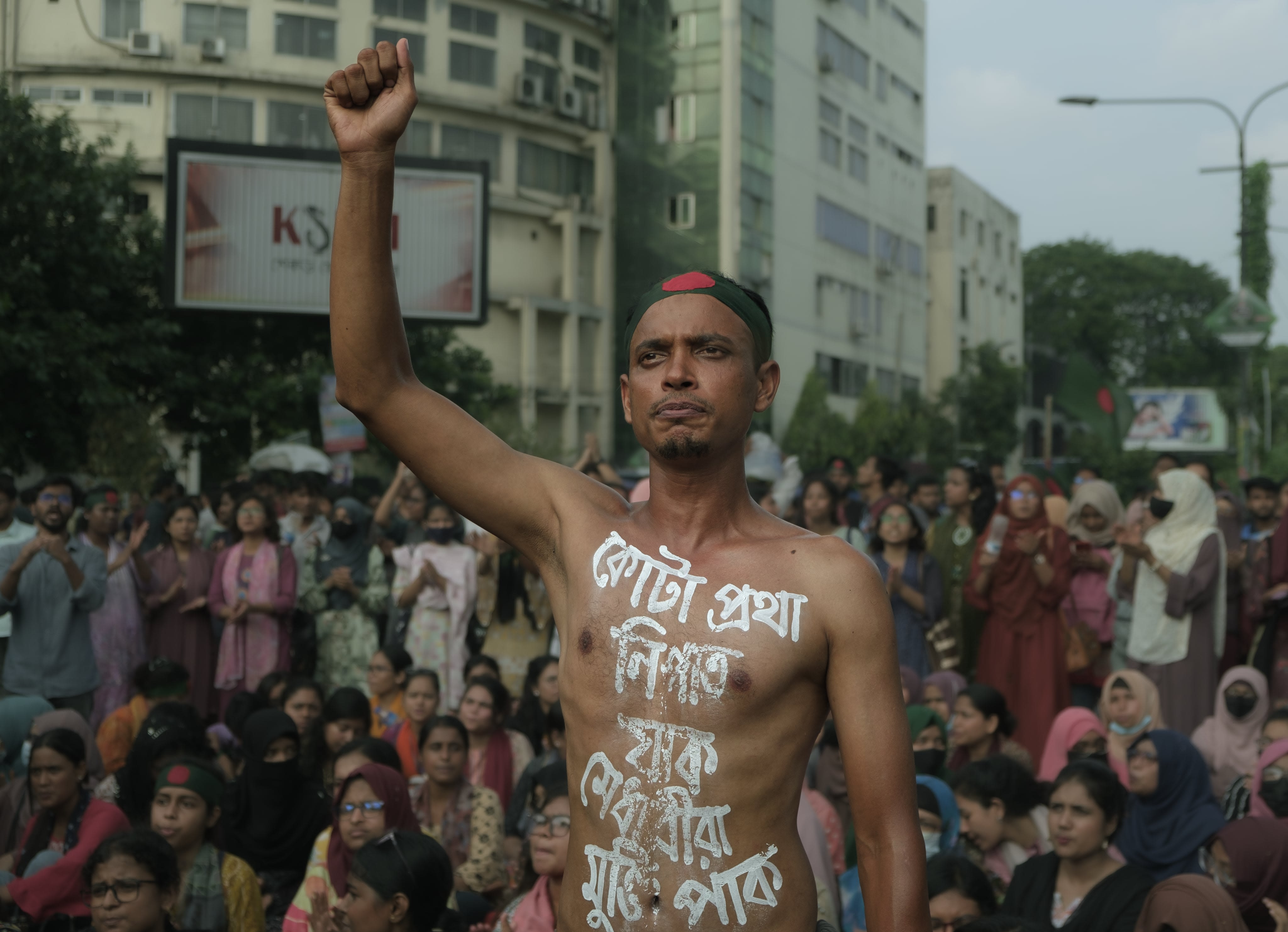
Quota reform protests in Bangladesh on 15 July 2024. Image Credits: Abul Hayat Rahadh.
Quota reform protests in Bangladesh on 15 July 2024. Image Credits: Abul Hayat Rahadh.
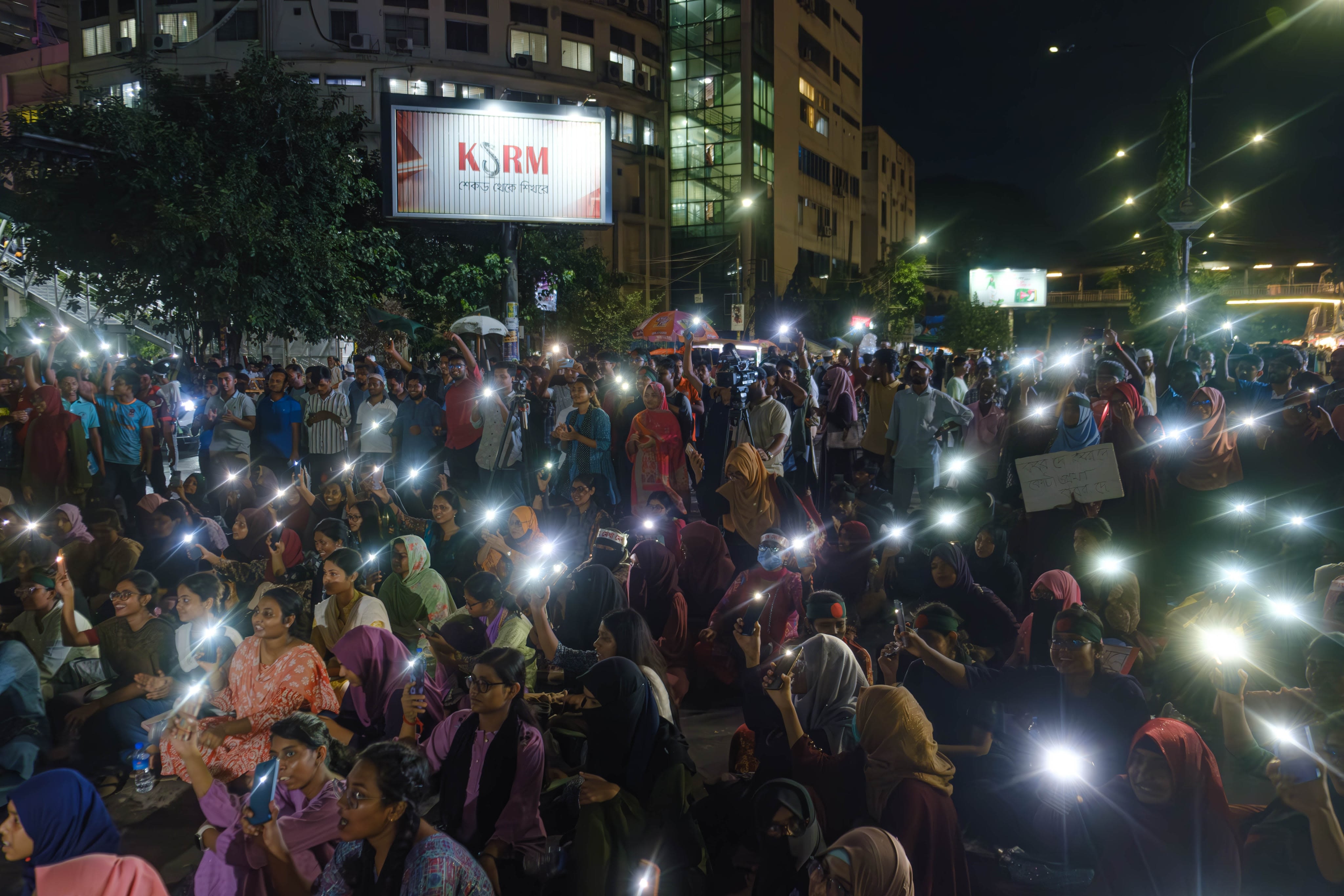
Quota reform protest in Bangladesh on 15 July 2024. Image Credits: Abul Hayat Rahadh.
Quota reform protest in Bangladesh on 15 July 2024. Image Credits: Abul Hayat Rahadh.
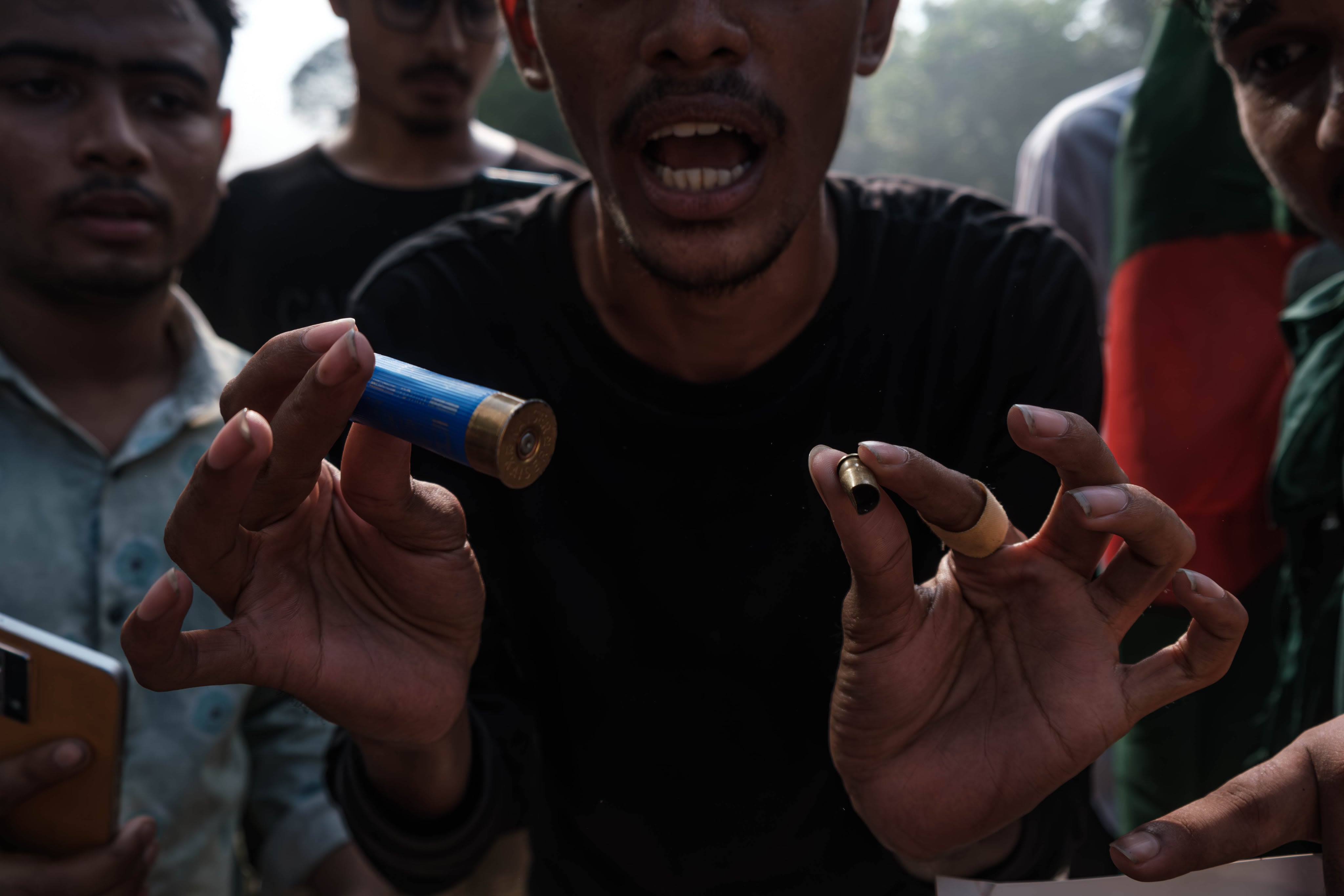
Protesters during the quota reform protests in Bangladesh on 15 July 2024. Image Credits: Abul Hayat Rahadh.
Protesters during the quota reform protests in Bangladesh on 15 July 2024. Image Credits: Abul Hayat Rahadh.

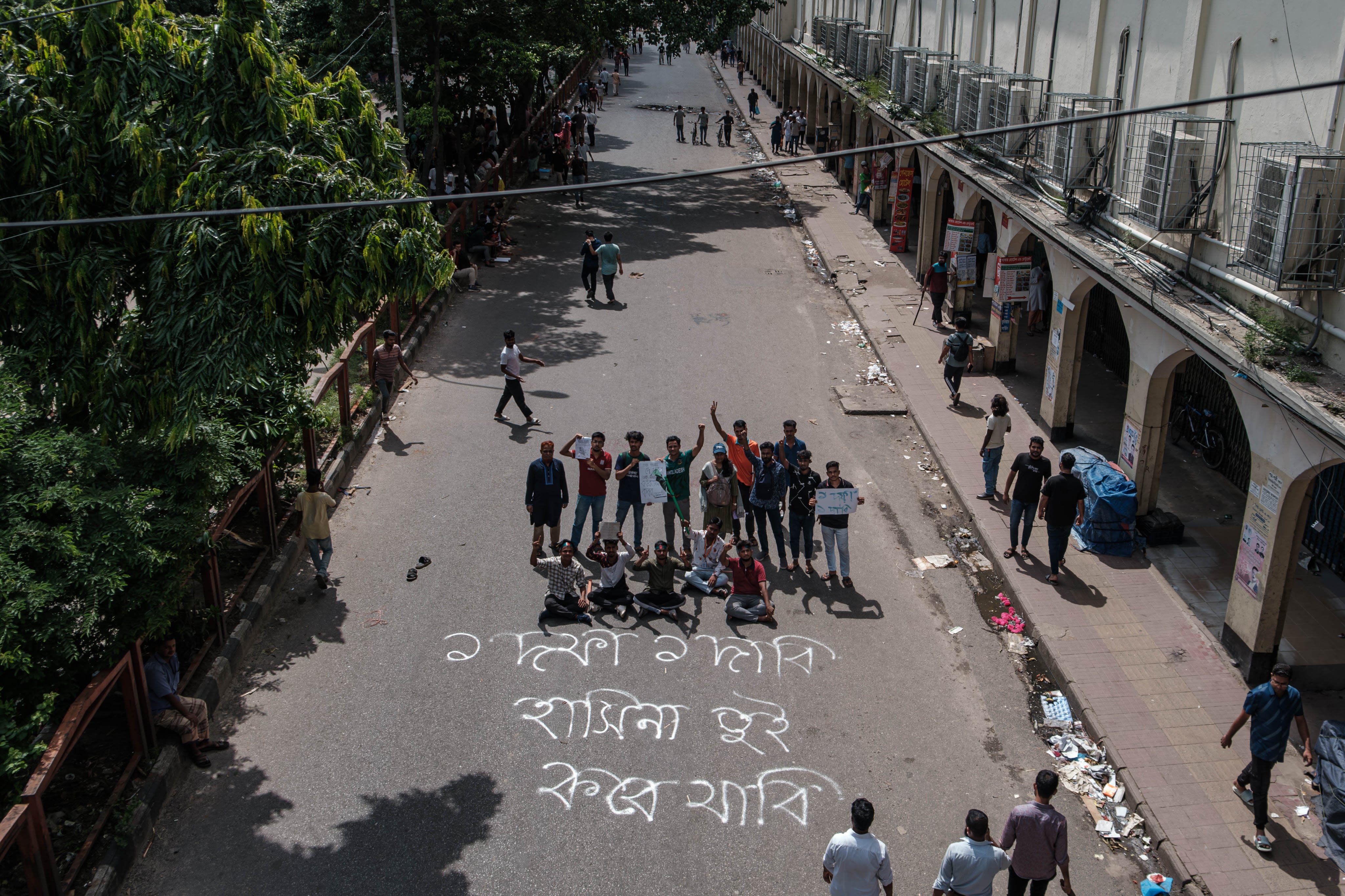
Civil unrest for the overthrow of Sheikh Hasina's Awami League government in Bangladesh on 5 August 2024. Image Credits: Abul Hayat Rahadh.
Civil unrest for the overthrow of Sheikh Hasina's Awami League government in Bangladesh on 5 August 2024. Image Credits: Abul Hayat Rahadh.
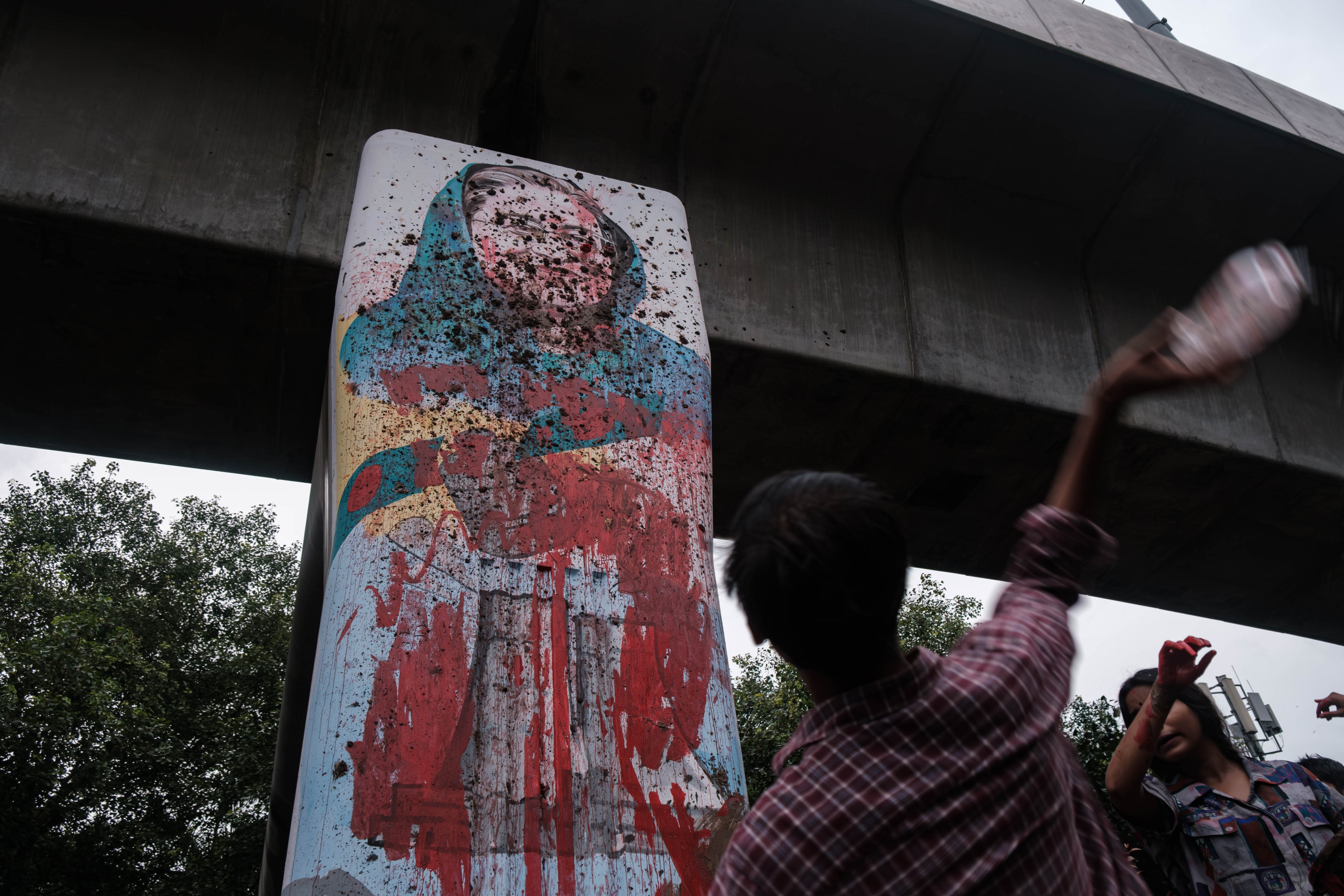
Civil unrest for the overthrow of Sheikh Hasina's Awami League government in Bangladesh on 5 August 2024. Image Credits: Abul Hayat Rahadh.
Civil unrest for the overthrow of Sheikh Hasina's Awami League government in Bangladesh on 5 August 2024. Image Credits: Abul Hayat Rahadh.
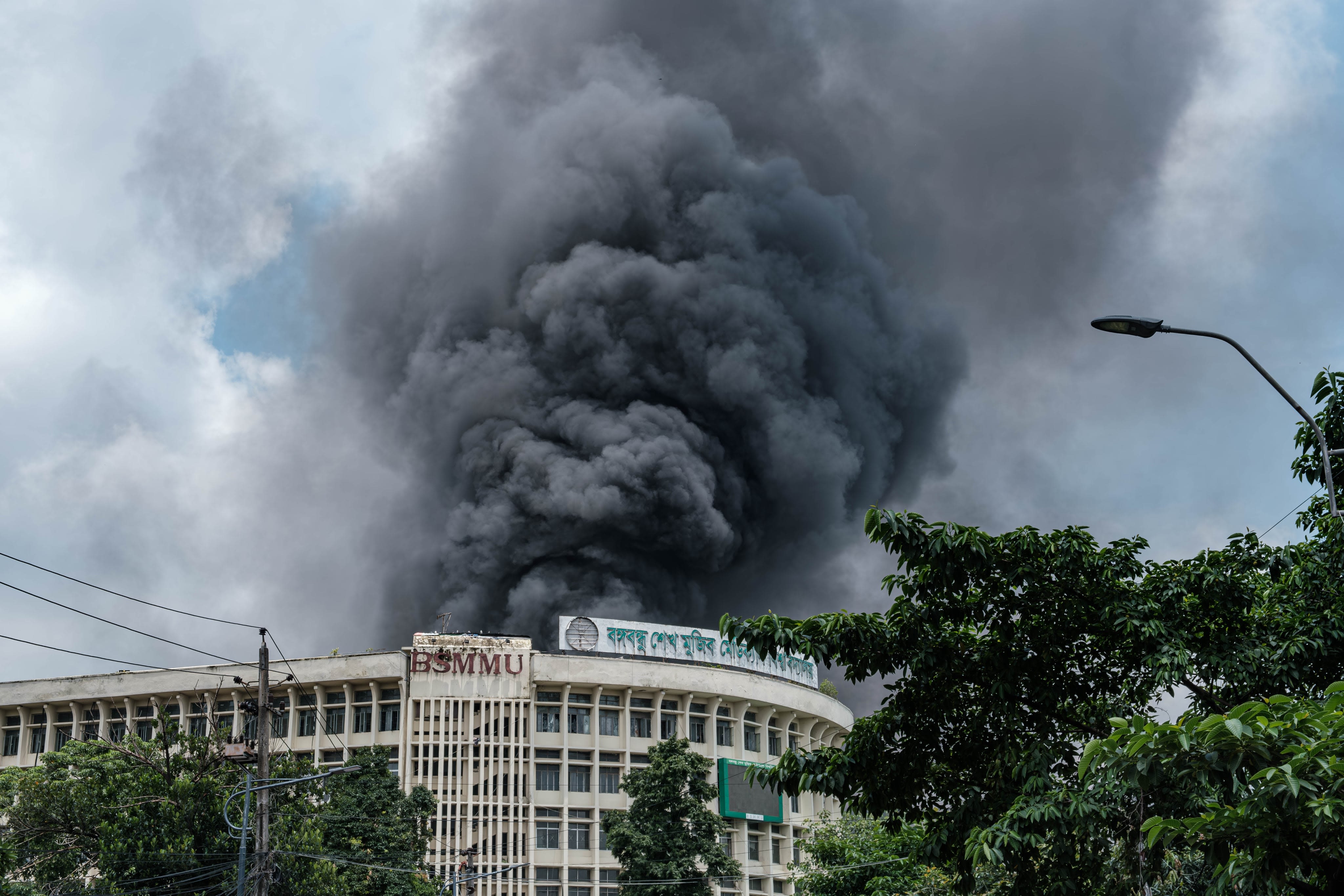
Protesters burning a government building during the overthrow of Sheikh Hasina's Awami League government in Bangladesh on 5 August 2024. Image Credits: Abul Hayat Rahadh. Image Credits: Abul Hayat Rahadh.
Protesters burning a government building during the overthrow of Sheikh Hasina's Awami League government in Bangladesh on 5 August 2024. Image Credits: Abul Hayat Rahadh. Image Credits: Abul Hayat Rahadh.
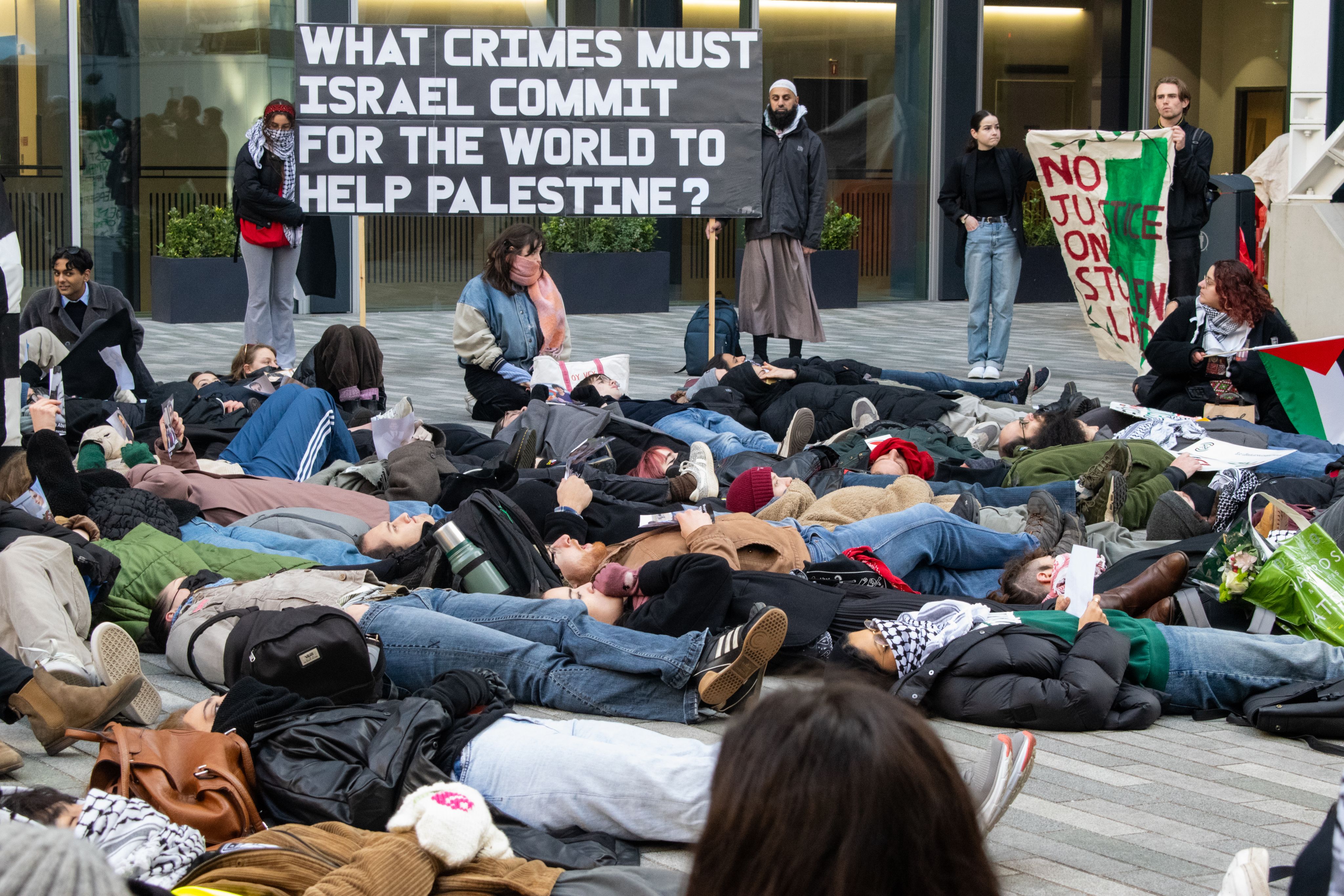
Students protesting outside universities in London to demand an immediate ceasefire and an end to support for Israel's occupation of Palestine. Image Credits: Nayonika Manna.
Students protesting outside universities in London to demand an immediate ceasefire and an end to support for Israel's occupation of Palestine. Image Credits: Nayonika Manna.

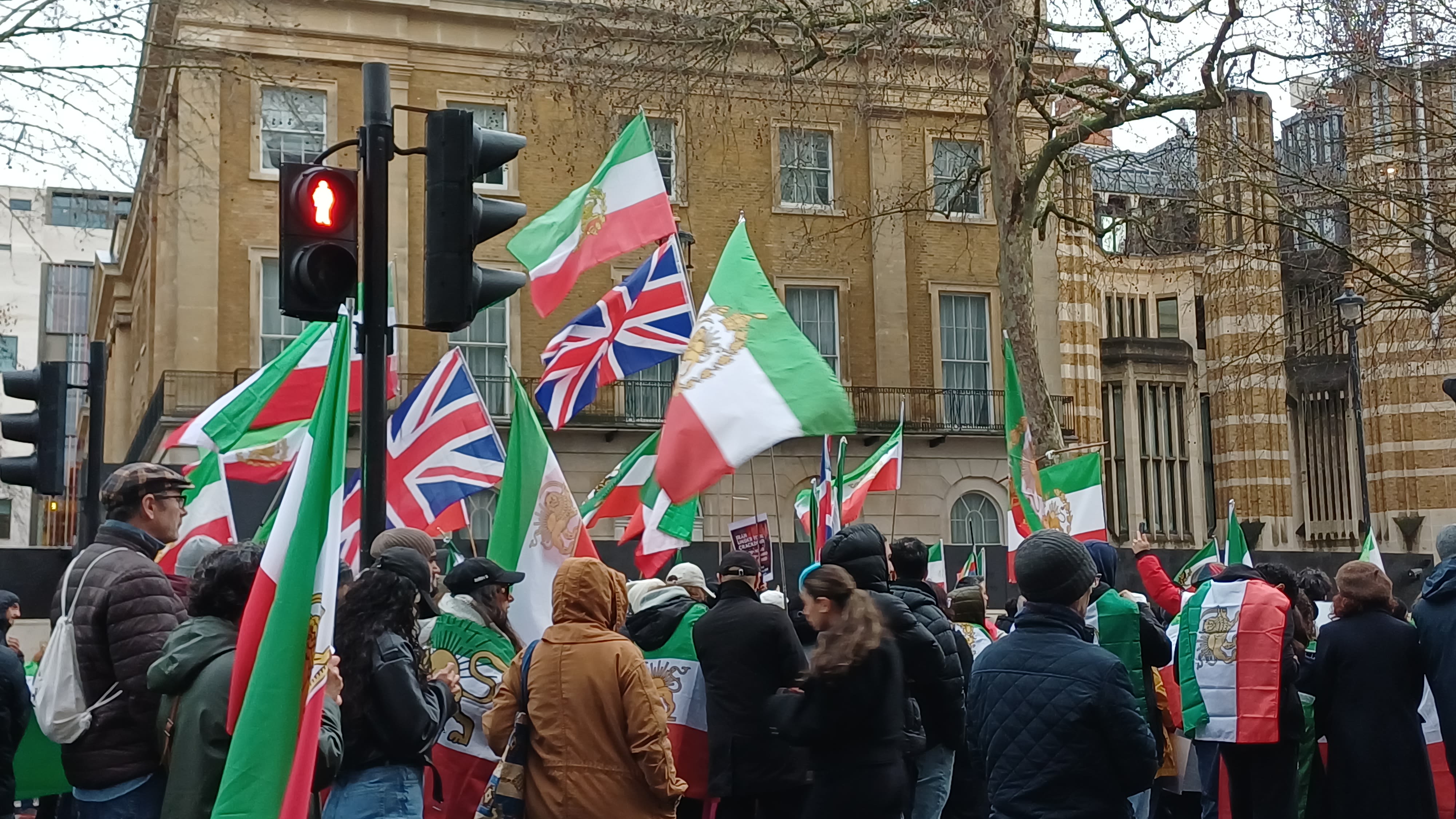
Thousands gather for Iran solidarity rally in Trafalgar Square, London on 7 February 2026. Image Credits: Nayonika Manna.
Thousands gather for Iran solidarity rally in Trafalgar Square, London on 7 February 2026. Image Credits: Nayonika Manna.

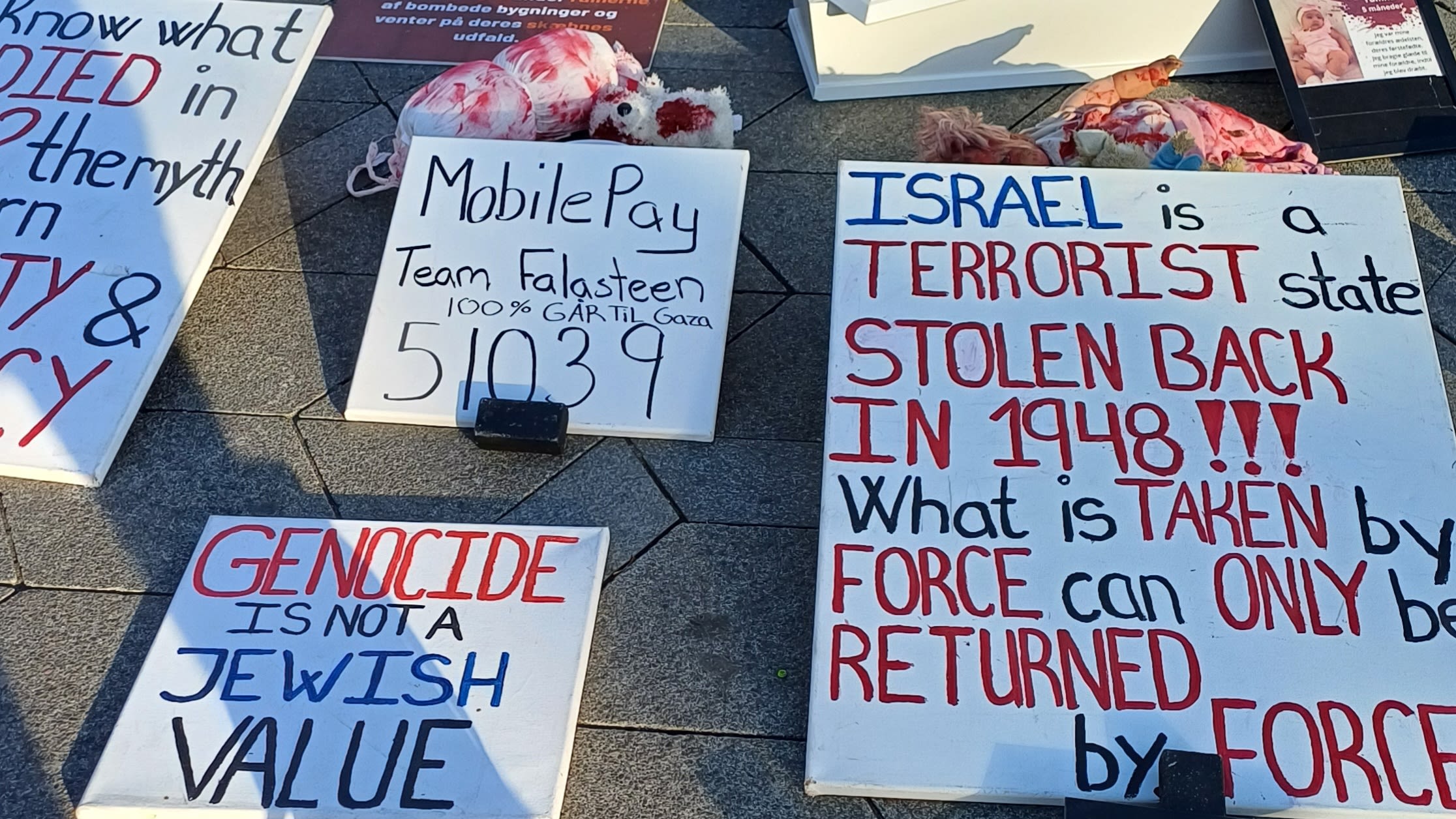
Protest in Copenhagen on 28 April 2025 to demand an immediate ceasefire and an end to support for Israel's occupation of Palestine. Image Credits: Nayonika Manna.
Protest in Copenhagen on 28 April 2025 to demand an immediate ceasefire and an end to support for Israel's occupation of Palestine. Image Credits: Nayonika Manna.
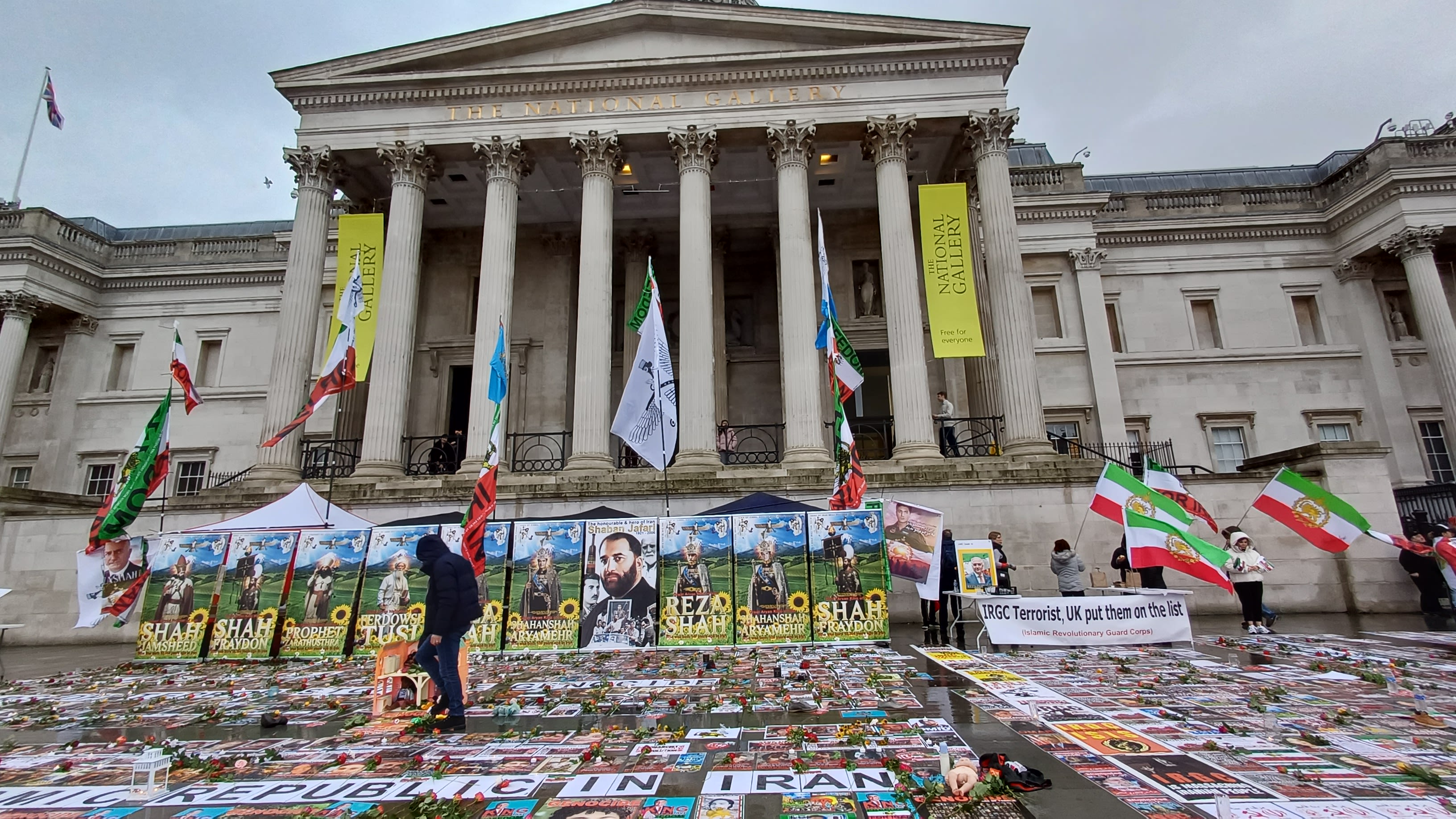
Thousands gather for Iran solidarity rally in Trafalgar Square, London, on 7 February 2026. Image Credits: Nayonika Manna.
Thousands gather for Iran solidarity rally in Trafalgar Square, London, on 7 February 2026. Image Credits: Nayonika Manna.
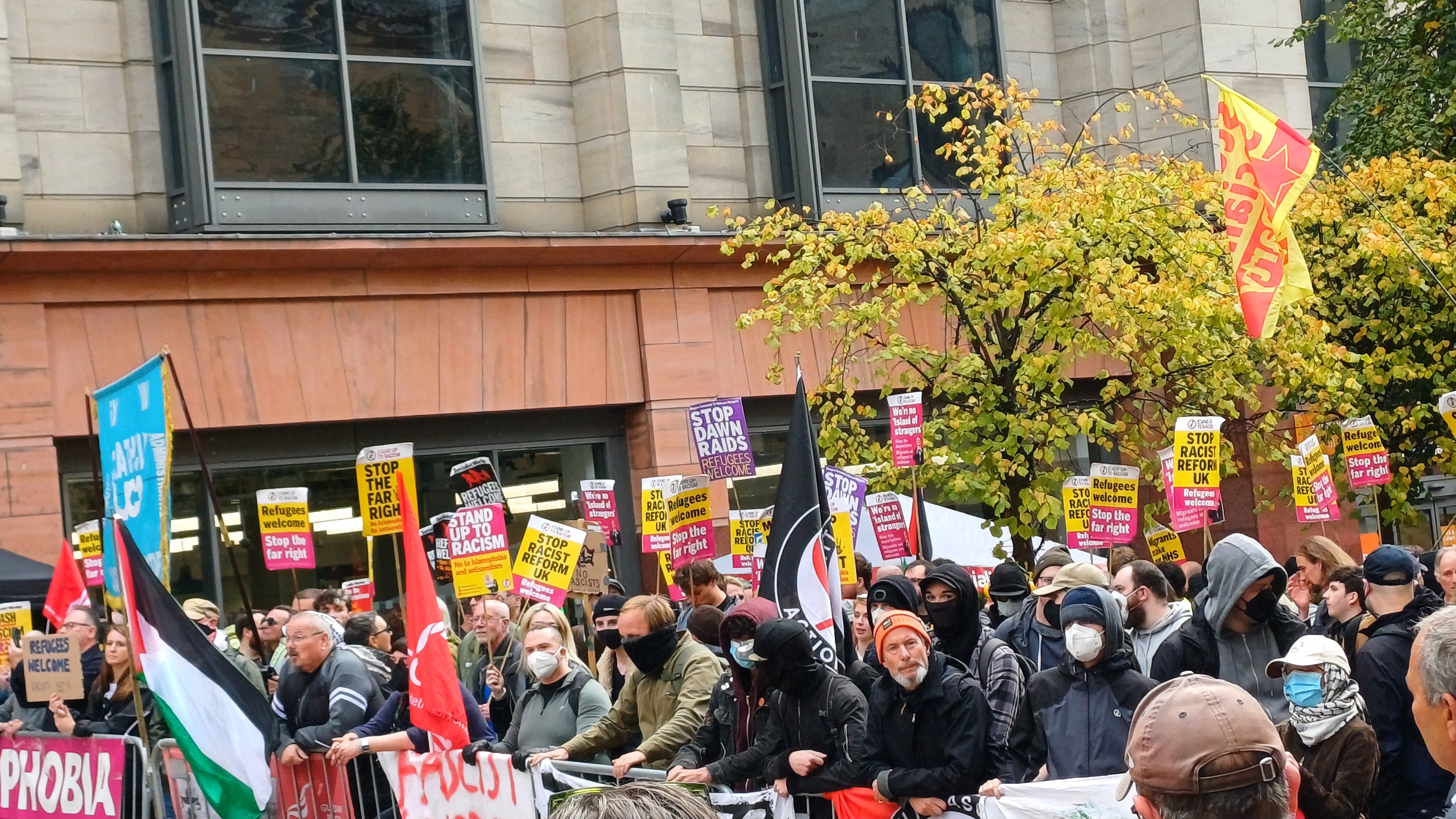
Stop the far-right protest in Glasgow, Scotland, on 20 September 2025. Image Credits: Nayonika Manna.
Stop the far-right protest in Glasgow, Scotland, on 20 September 2025. Image Credits: Nayonika Manna.

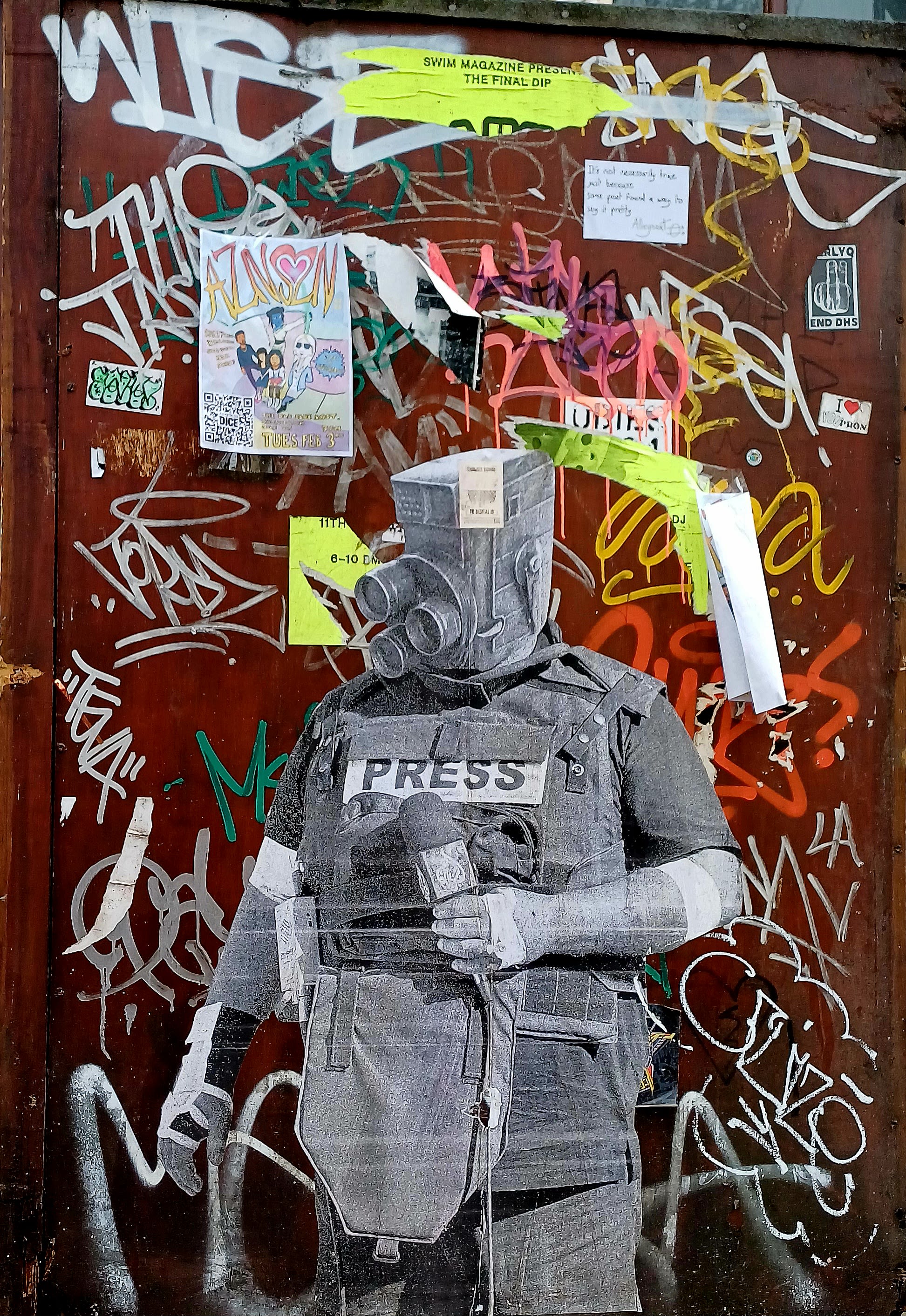
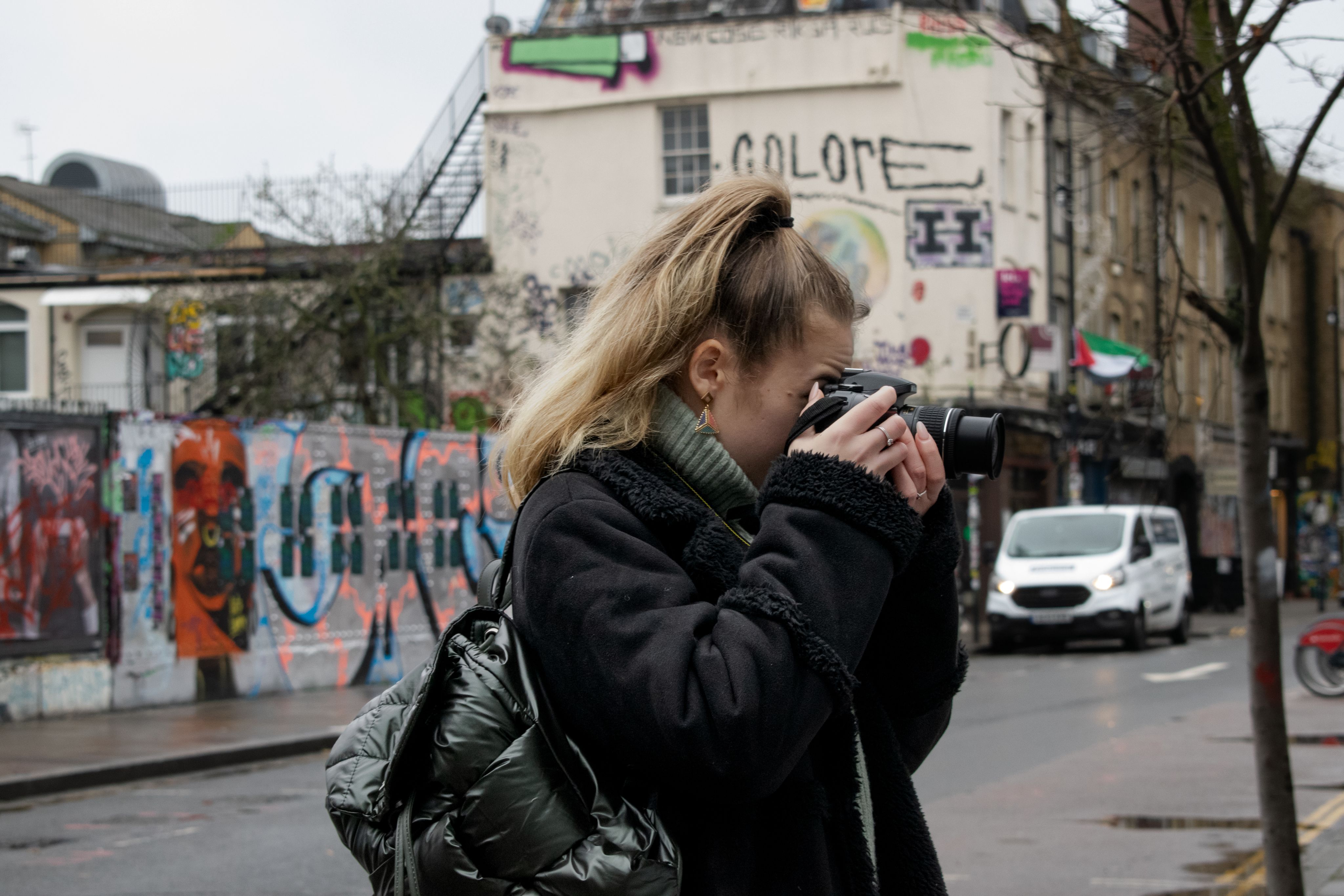
Artwork displayed in Shoreditch, London. Image Credits: Nayonika Manna.
Artwork displayed in Shoreditch, London. Image Credits: Nayonika Manna.
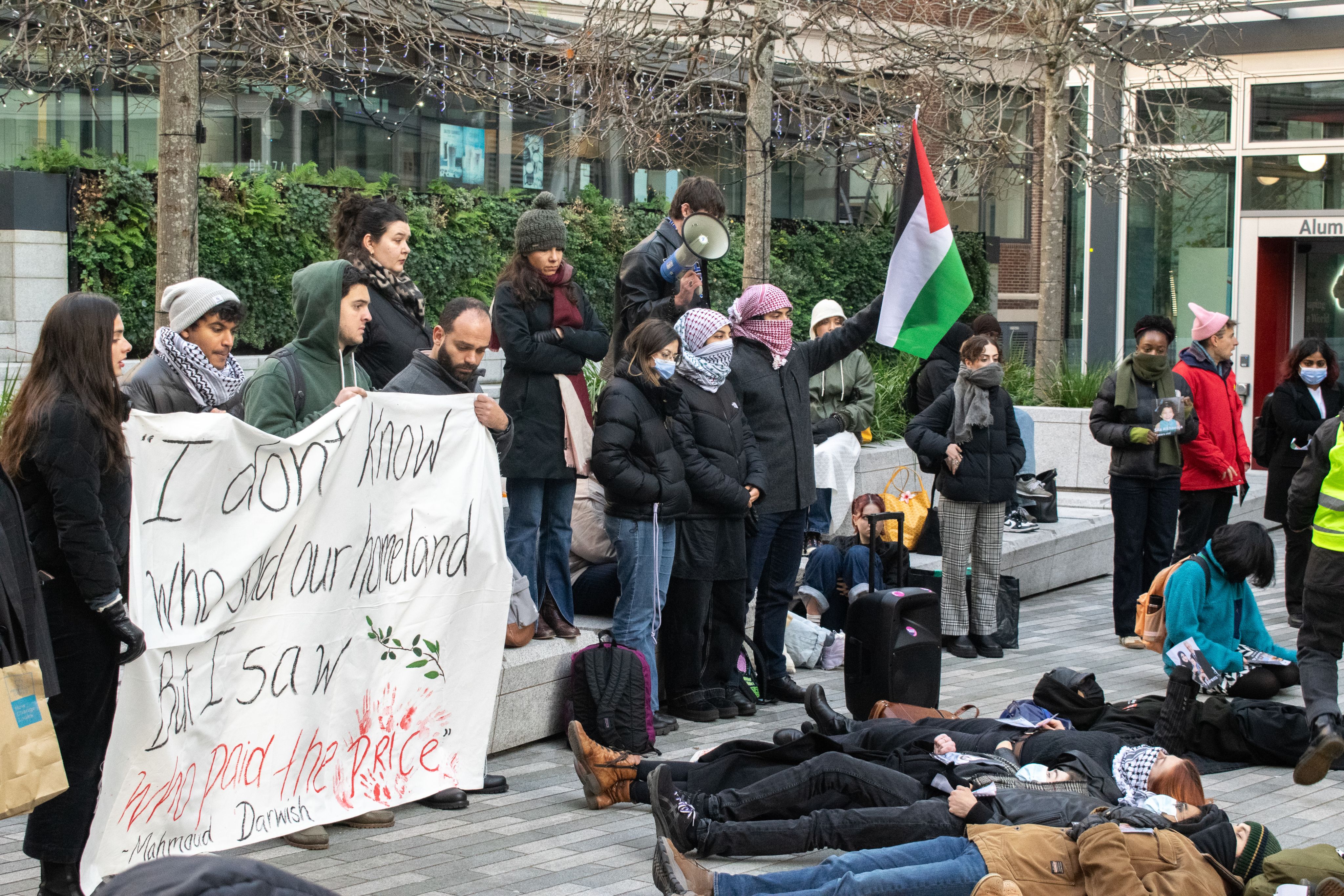
Students protesting outside universities in London to demand an immediate ceasefire and an end to support for Israel's occupation of Palestine. Image Credits: Nayonika Manna.
Students protesting outside universities in London to demand an immediate ceasefire and an end to support for Israel's occupation of Palestine. Image Credits: Nayonika Manna.

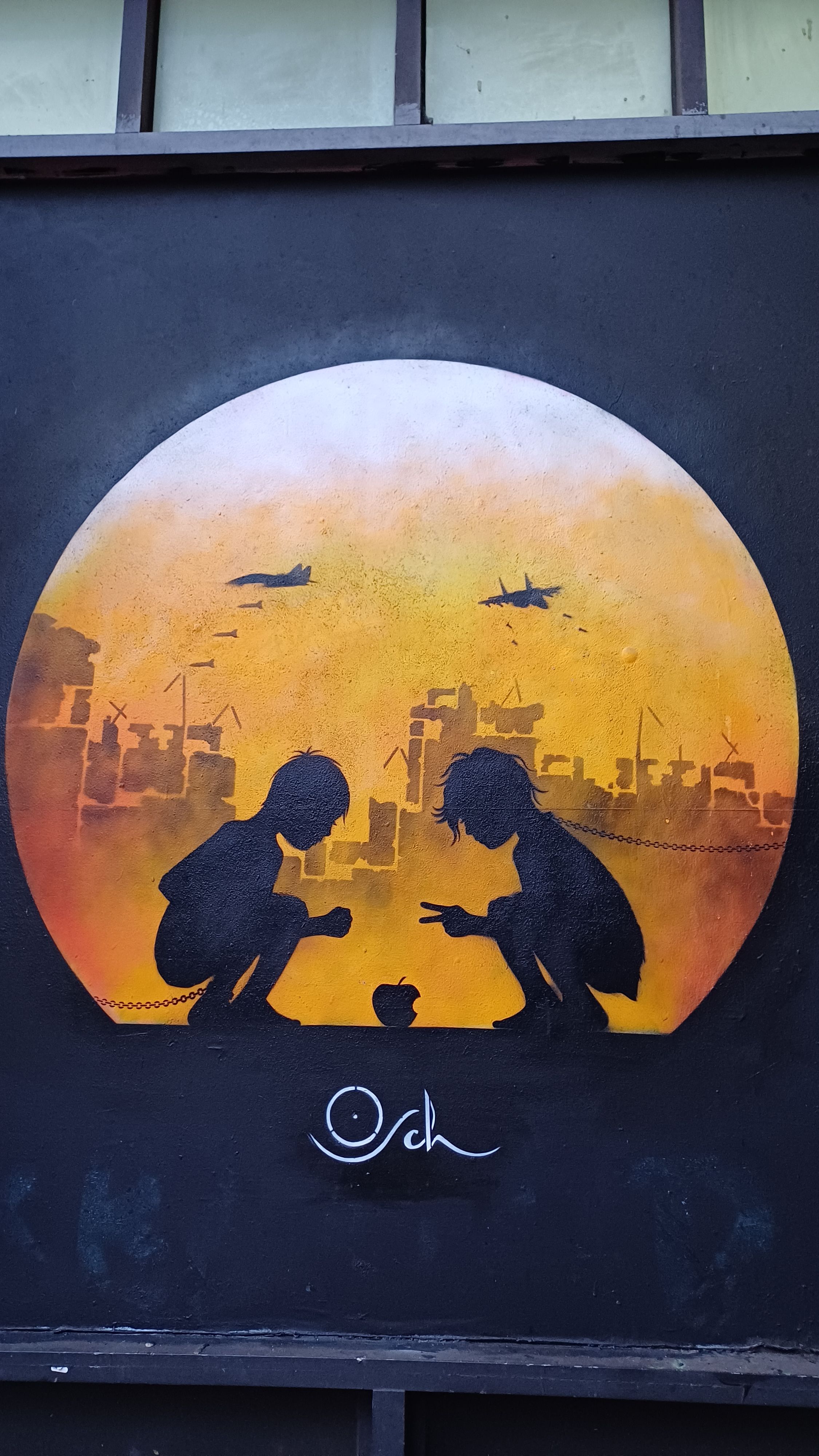
Artwork displayed in Shoreditch, London. Image Credits: Nayonika Manna.
Artwork displayed in Shoreditch, London. Image Credits: Nayonika Manna.
THE PARADOX OF 2026: THE WORST AND BEST OF TIMES
If the mission of journalism is to shine a light, there is no more rewarding time to be a reporter than when the world is trying to go dark.
And yet, this moment is defined by contradiction. It is one of the most dangerous but necessary times to be a journalist.
The emergence of AI-generated voices, deepfakes, and influencer “hot takes” has transformed the eyewitness into a rare and high-stakes commodity. As Flynn notes:
Why the Human Witness Still Matters in the Age of AI | Joel Flynn | Reporter: Nayonika Manna
The four stages of attack are not a sign of journalism's weakness. They are proof of its power.
Truth is still the only thing that can disrupt the plans of the powerful. And if the truth was in their favour, why would they try so hard to hide it?
.
.
.
From the ecstatic crowds at the Berlin Wall to the editors dodging drones in Ukraine, the format of history has changed, but the necessity of the witness remains unchanged.
As long as there are people who run toward the gunfire, the first draft of history will not be a lie. It will be human.
For the next generation, the challenge is immense, but the reward is the survival of a free society itself.
 Built with Shorthand